imprisonment

The invisibility of young peoples voices in the Don Dale royal commission’s interim report

Body
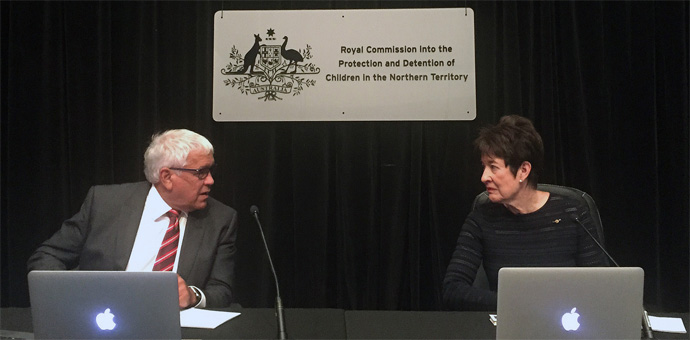
Mick Gooda and Margaret White - Northern Territory Youth Detention Royal CommissionersNorthern Territory Youth Detention Royal Commissioners Mick Gooda and Margaret White
(The Australian)

Young people’s voices are all but invisible in the Don Dale royal commission’s interim report
By Thalia Anthony
Associate Professor in Law, University of Technology Sydney
6 April 2017

More proof: The criminal justice system is biased against First Nation People

Body

The NSW 'Bureau of Crime Statistics and Research' tells us that the rise in Indigenous imprisonment in NSW is due to a combination of higher rates of arrest resulting in conviction, a greater likelihood of imprisonment given conviction and a higher rate of bail refusal.
 
We already know this, it's not rocket science, so why do the politicians refuse to do anything about it?

Aboriginal prisoners used as slave labour in Northern Terriory

Body

The Northern Territory branch of the United Voice union says a program that allows prisoners to work at a central Australian salt mine for award wages is akin to slave labour.

The Territory Government says low-security prisoners are being trained for work at a potash project near Curtain Springs because the company had trouble recruiting staff.

Why are so many First Nations kids in detention in the NT in the first place?

Body

Thalia Anthony, Associate Professor in Law, University of Technology Sydney

Across Australia, Indigenous children constitute at least 54% of children in juvenile detention centres. The proportion of Indigenous children in penal detention centres in the NT is higher than in any other state or territory: 97% of children in NT juvenile detention centres are Indigenous.

Eddie Murray: Back where it all began

Body
CULTURAL WARNING - Images and voice

June 2016 marked 35 years since the death of Eddie Murray in police custody. Eddie’s passing still causes reverberations today – it was in part the efforts of his father, Arthur Murray, which led to the establishment of the Royal Commission into Aboriginal Deaths in Custody. EMMA PURDY* reports.

Three decades on, the death of Douglas Scott remains unresolved

Body
Douglas Scott

Mr Scott's death was one of the 99 cases examined by the Royal Commission into Aboriginal Deaths in Custody in 1989. Mrs Scott were shown photographs of Mr Scott hanging in his cell by two lawyers assisting the Commission in the Northern Territory. Mrs Scott said the photographs showed him suspended inches from a grate in the nine-foot-high ceiling with his feet dangling two to three feet from the floor, the noose around his neck made from a plain and tightly twisted sheet that was neatly tied in multiple knots which were tight and close together. She did not believe her husband made the noose.

'They said I was headed to the big prison': A new lost generation

Body

DEREK'S friends got him into stealing in his mid-teens. He was thrown in juvenile detention twice, cut off from his family and missing school, instead surrounded by endless opportunities for further crime. "It's not easy, you got no family to talk to," he said. "They said, as soon as you hit 18, you'll be heading to the big prison, the man's prison." Derek was one of the lucky ones. While on parole, his uncle organised for him to do community service and later to work at a tourism organisation on his traditional Aboriginal country in the Kimberley.

A generation lost if Indigenous youth incarceration rate continues: Amnesty

Body

First Nations youth are 24 times more likely to be incarcerated than other Australian youth, Amnesty International has found. Amnesty International secretary-general Salil Shetty at the National Press Club in Canberra said the rate would have devastating consequences. "We will see another generation lost to failed government policies unless Australian Governments get smarter about this, and fast," Mr Shetty said. "We will see another generation lost to failed government policies unless Australian Governments get smarter about this, and fast"

Truth, not lies, on First Nations suicide rates

Body

Suicides in First Nations communities are linked to extreme poverty and disadvantage from the beginning of life, intergenerational trauma, cultural identity, racialisation and racism. Often alcohol and substance abuse are considered by many as underlying causes but these are not underlying causes and rather they are at best contributing factors borne symptomatically of the conditions above.

This article and links to all many other articles by First Nation suicide expert Gerry Georgatos.

Meston's 'Wild Australia' Show 1892-1893

Body
Meston's 'Wild Australia' Show 1892-1893

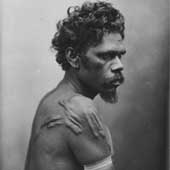
A little before 1892, Archibald Meston who later became the Southern Protector of Aboriginals for Queensland rounded up 27 First Nations people from Wakaya, Kuthant, Kurtjar, Arapa, Walangama, Mayikulan, Kabi Kabi, Kalkadoon and Muralag. There were 22 men, four women and one child. He called his prisoners the 'Wild Australia' show and carted them down the east coast of Australia until he ran out of funds and deserted them in Melbourne. - A Photographic Exhibition aims to reconnect families to their descendants.