Caption 1
⬅
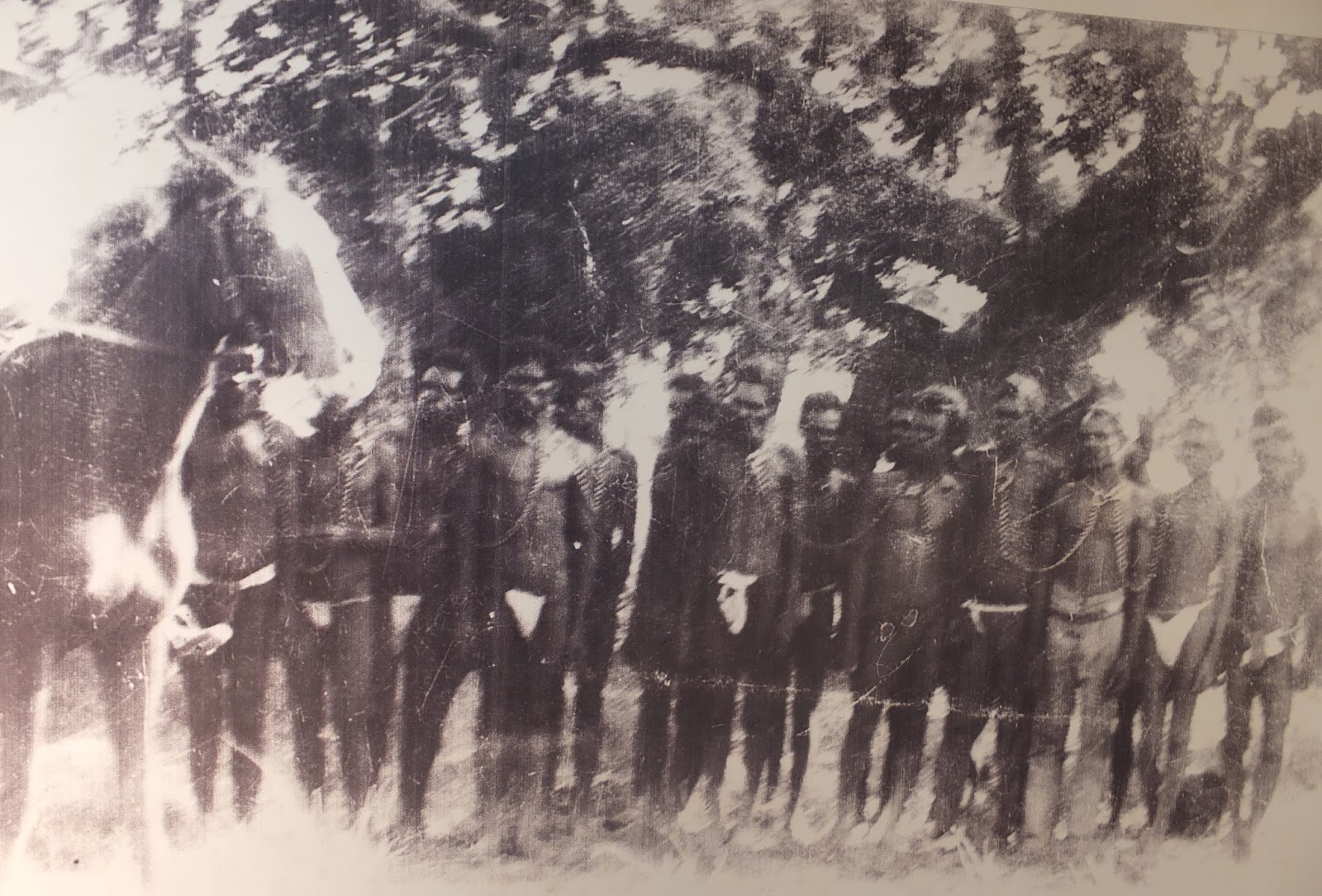
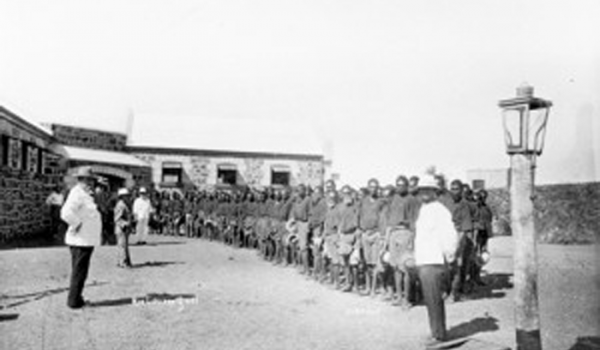
Wyndam Police Station, East Kimberley, Western Australia 1905 - Click images for enlarged and expanded view
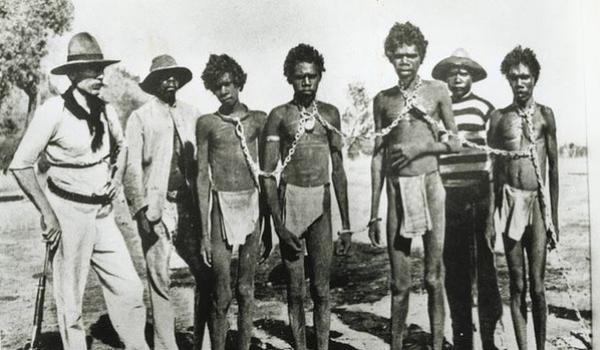
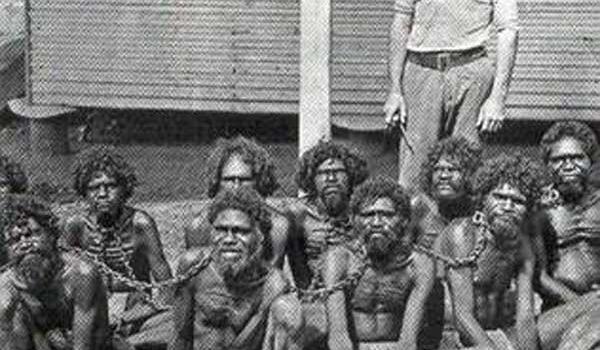
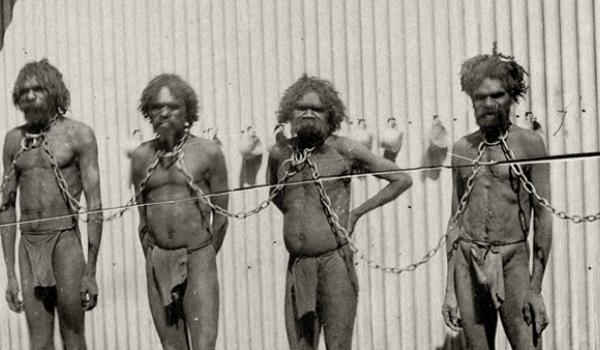
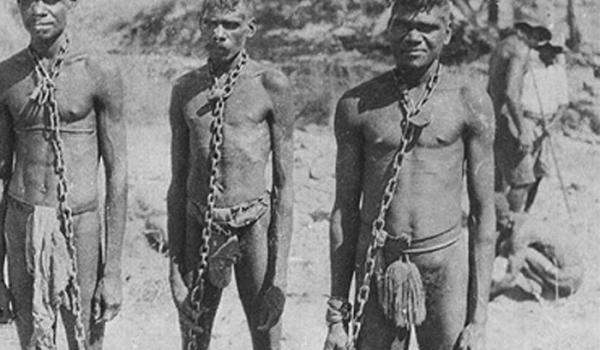
Prisoners of an undeclared war: Aborigines in shackles early last century.
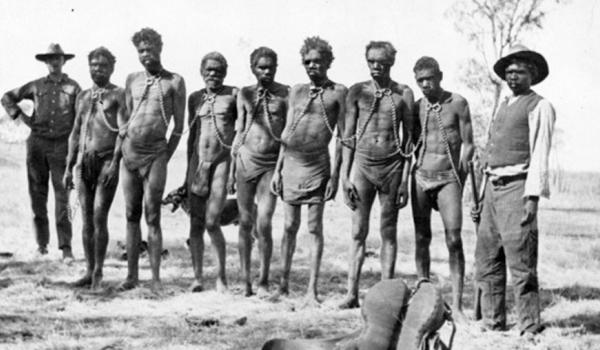
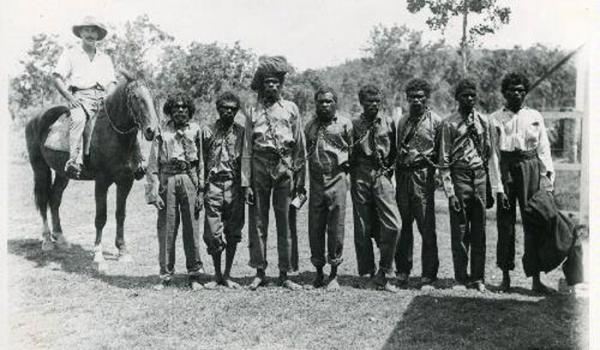
Bringing prisoners to Wyndham for spearing cattle, 1930. Photo Courtesy State Library of Western Australia, The Battye Library
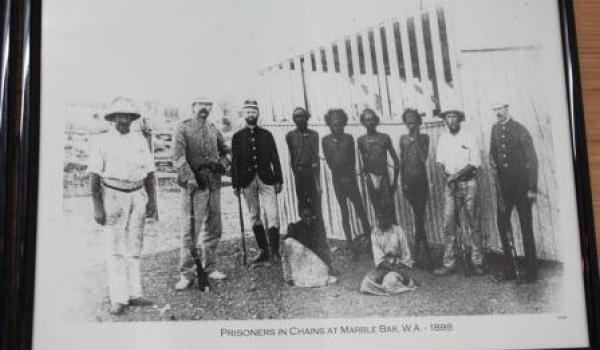
Prisoners in chains at Marble Bar, Pilbara, Western Australia in 1898
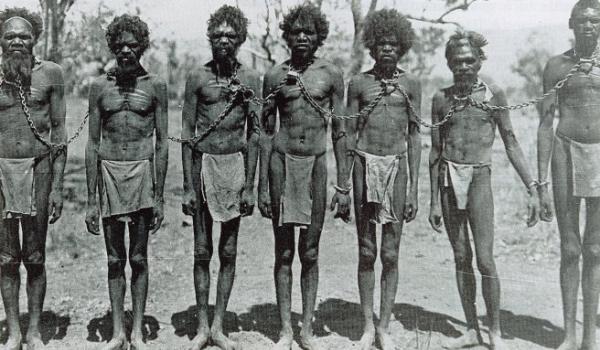
1906
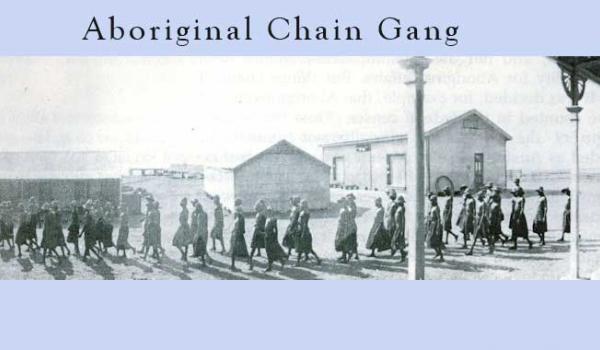
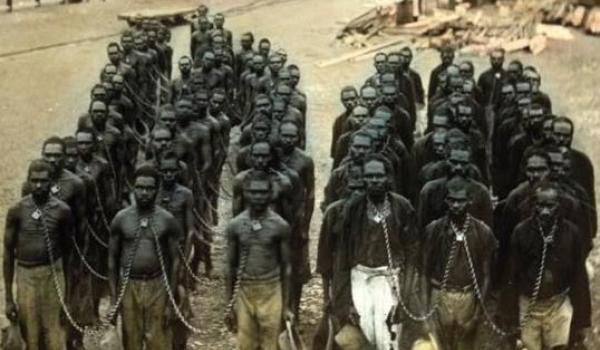
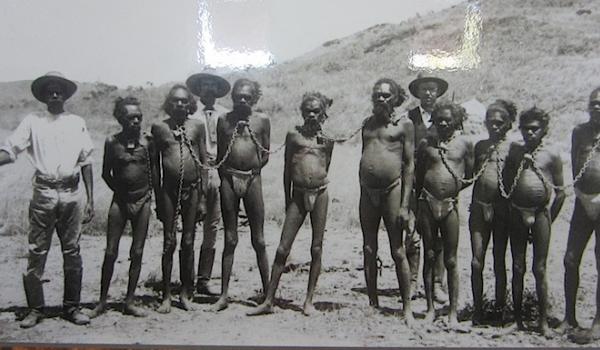
An Aboriginal chain gang, about 1900, going to work at Wyndham, Western Australia. The guard is on the extreme right - visable when enlarged
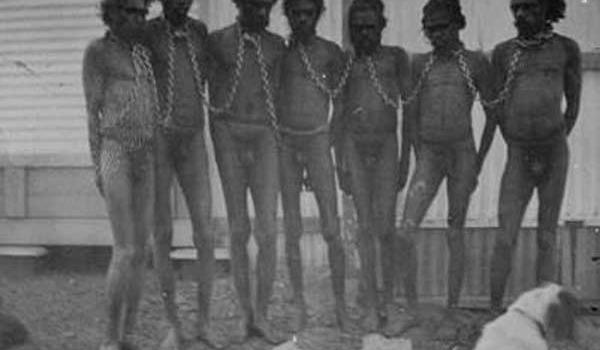
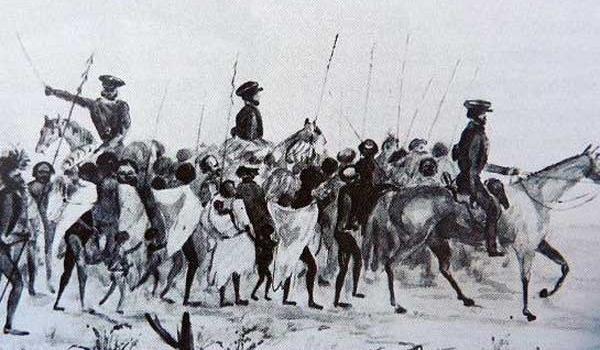
With the eyes of the law often several days' ride away the settlers had little to fear. Gangs of stockmen went on what was known as 'the Big Bushwhack' or simply 'the Drive': a hunt for Aboriginal people which lasted several months [2]. They thought there was nothing wrong with shooting Aboriginal people or raping Aboriginal women.
Aboriginals taked to court - Sydney
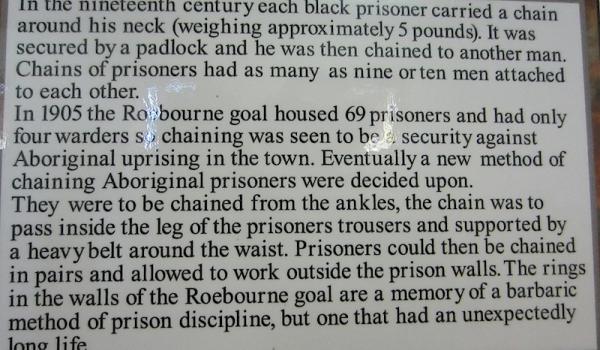
Roebourne Jail in the 19th century
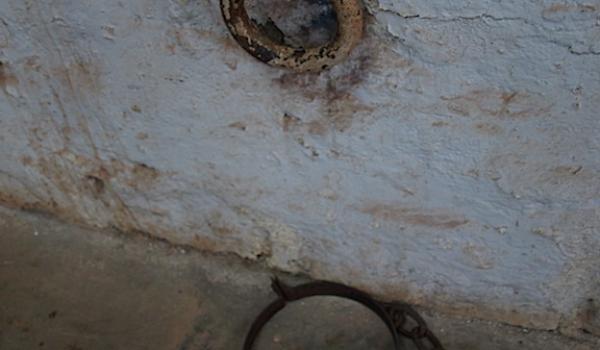
Chain ring in Roebourne gaol. The band on the floor goes around the prisoner’s neck.
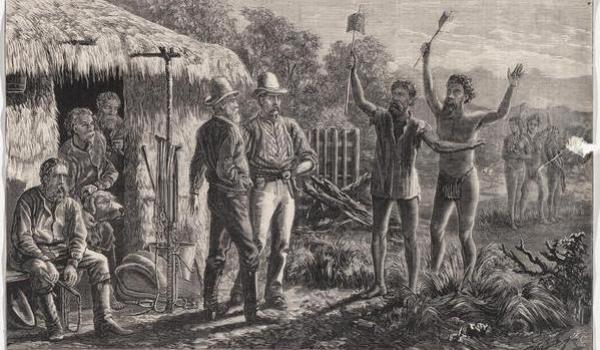
'Arrival of blacks with flags of truce' This engraving depicts the traditionally mythologised reception the Aboriginal people showed the British colonisers; a genial and peaceful welcome -- a depiction and its implications now questioned by Australian history researchers
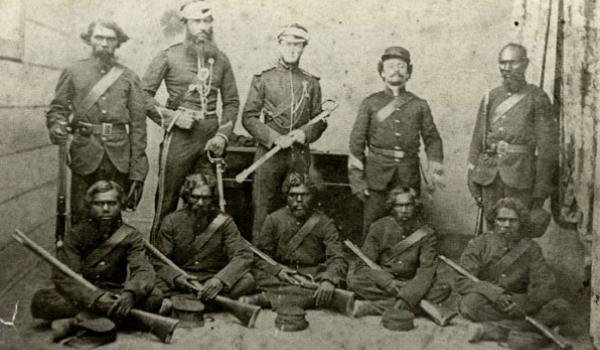
A Native Police Force (1842) These forces were established in Port Phillip in 1842 in New South Wales and 1859 in Queensland. The force was built up of young Aboriginal men who were sent to kill Aboriginal people of different language groups. This was a vital contribution to the defeat of the Aboriginal resistance. Some researchers now believe that the Native Policemen were recruited through blackmail.
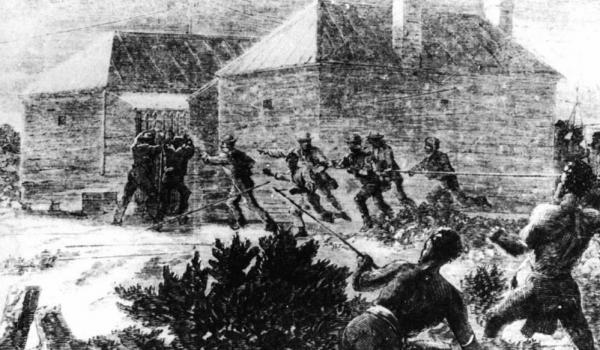
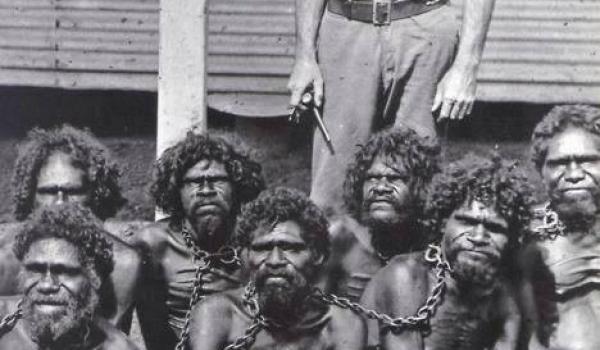
Captive and chained Aboriginals early 1900s. Click image to expand it.
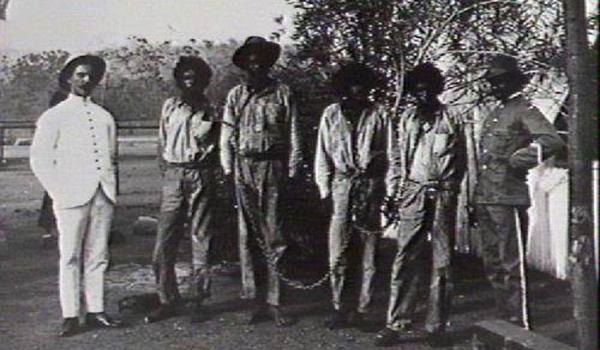
No more details known - requires research
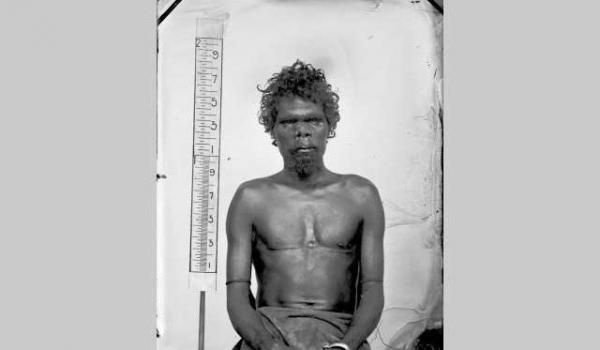
Paul Foelsche, Studio portrait if Aboriginal man, hand chained at right c.1875, Northern Territory
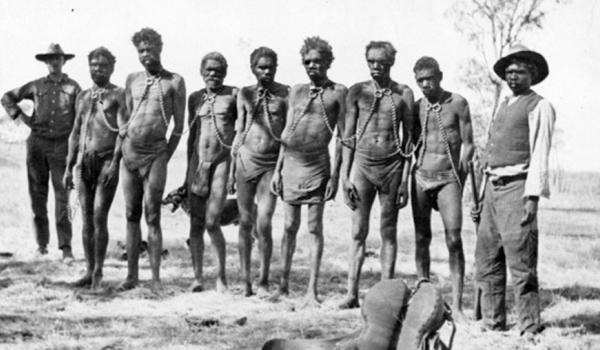
Bringing prisoners to Wyndham for spearing cattle, 1930. Photo Courtesy State Library of Western Australia, The Battye Library
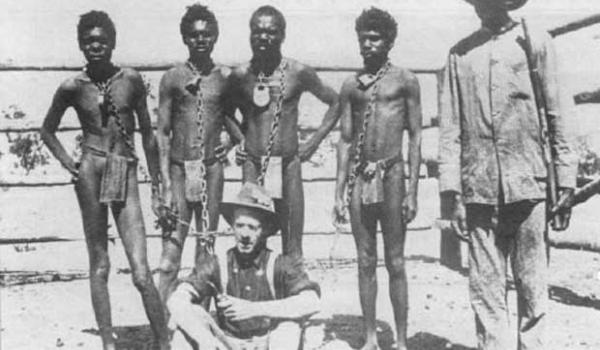
Four First Nations men - accused of murder circa 1900
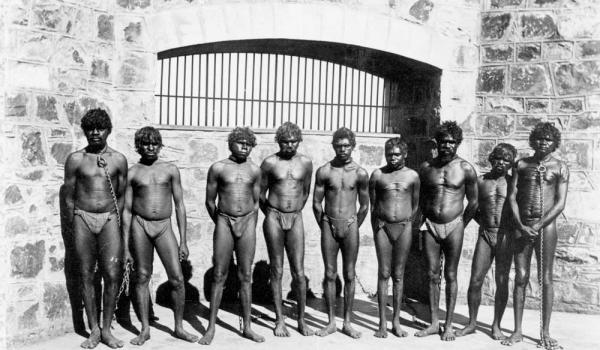
Roebourne Prison inmates - for crimes like 'absconding' from ‘blackbirding’ - slavery
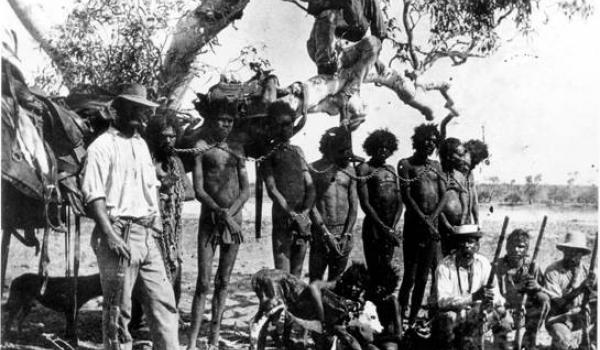
Details unknown
Details unknown
Roebourne Prison pictured. In 1889, Samuel McLeod wrote, “On arriving at Roebourne we saw gangs of unfortunate Aborigines chained to wheelbarrows with bullock chains… The effect of the chains can be imagined in a climate where the stones get so hot they cannot be handled. The sight was too painful for most of us from a free land.” (Photo – Battye Library, WA)
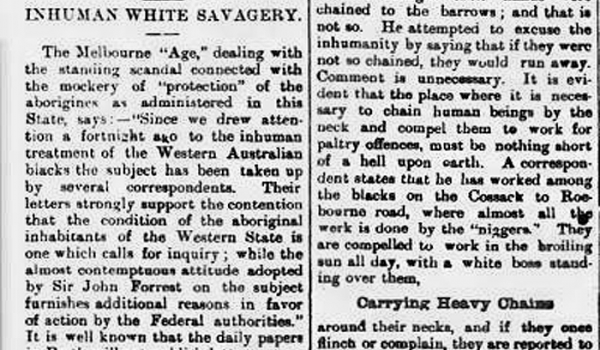
From West Australian Sunday Times 21 June 1901 - complete copy and transcript - www.trove.nla.gov.au/newspaper/article/32719352
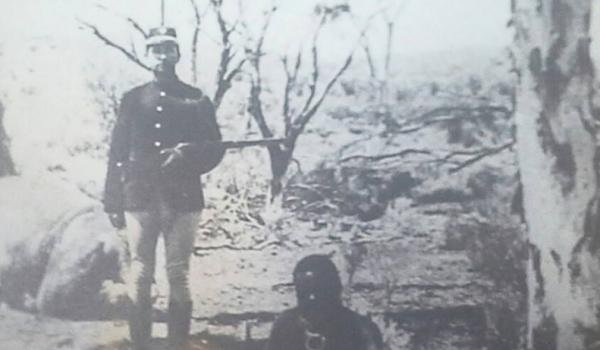
Trooper with a First Nation prisoner in shackles
Click image to see widescreen image
No more details known - requires research
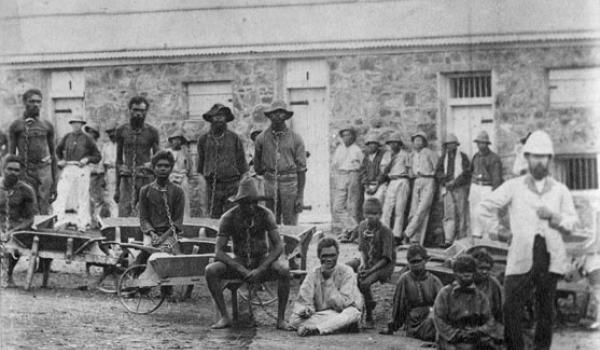
ca. 1890-1900 - Prisoners probably gathered for work detail. Some European men and Chinese men at back. Battye Library, WA
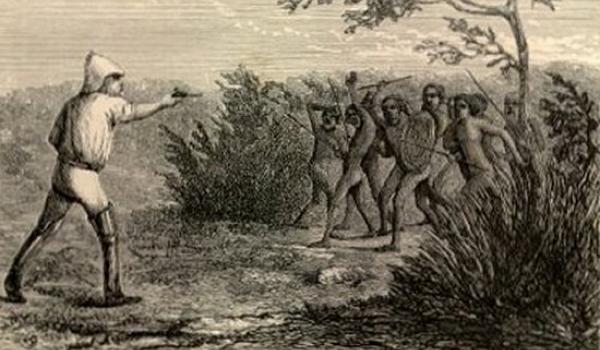
The unspeakable savagery the British and their Anglo-Celtic Australian spawn unleashed upon Aboriginal Australia included the 'sport' of burying Aboriginal babies and children up to their necks and then kicking the heads until decapitation.
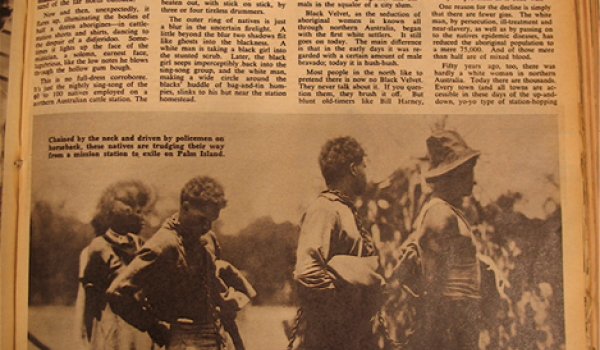
‘Black Velvet’ was revealed by Fairfax publication, People magazine in 1956.The article by Walkley award-winning journalist Harry Cox has a picture with men in chains
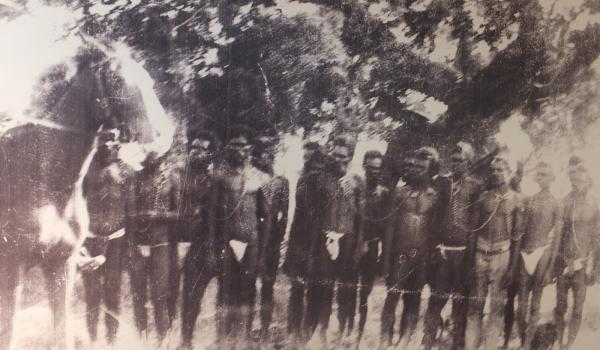
Aboriginal people were kidnapped from the West Kimberley region in the late 19th century. The kidnappers known as 'blackbirders' captured workers for the pearling boats. Captives were sometimes locked in hollow Boab Trees while they waited for a boat.
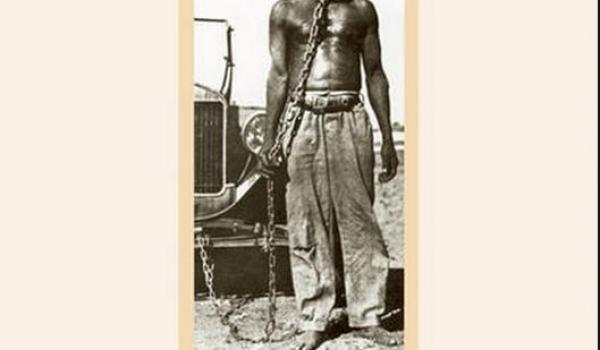
Willaberta Jack was wrongly accused of protecting an escapee. He alluded search parties for several months before giving himself up to the police. He was arrested and taken to Darwin in chains for trial. A CAAMA book for sale online
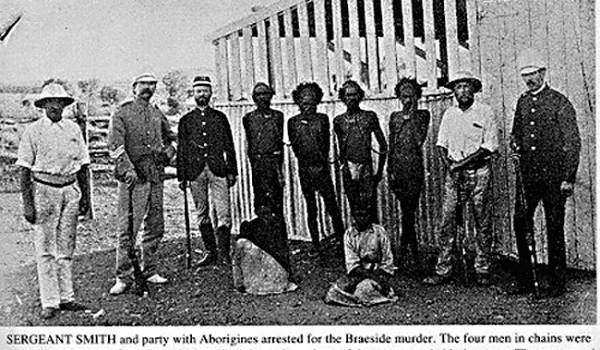
In 1908 some Aborinal men were rounded up after a doctor was killed by mistake. In the confusion regarding the languages with Roeburne trackers during the hunt, a number of the wrong men were shot and four were taken as prisoners. After they were hung it was established that at least three of the men were innocent.
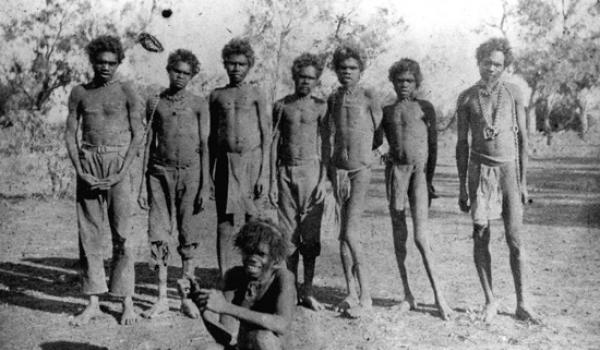
Aboriginal men in chains on Ord River Station, 1900s. (Battye 004648d)
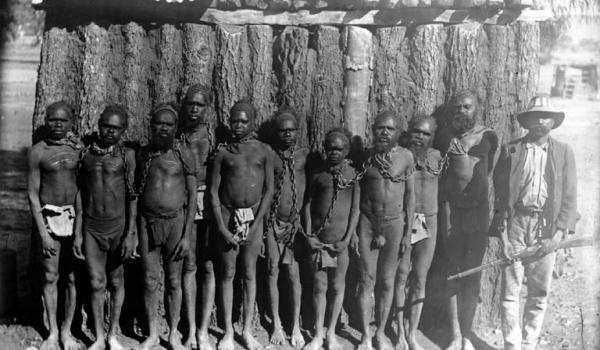
23 June 1906, Alice Springs - Ten aboriginal prisoners at gaol, Heavitree Gap police camp, charged with stealing beef from James Cummings, sentenced to 6 months each in Port Augusta gaol.- Bradshaw Collection.
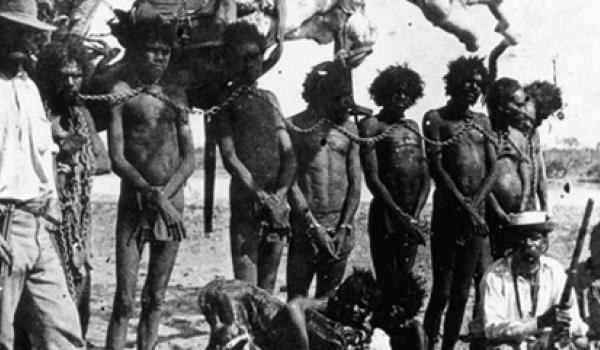
The LIEUTENANT GOVERNOR has directed, that a Reward of FIVE POUNDS shall be given for every adult Aboriginal Native, and TWO POUNDS for every Child, who shall be captured and delivered alive at any one of the Police Stations.
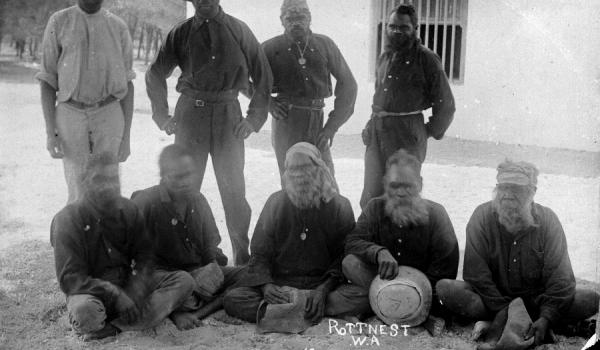
Aboriginal prisoners on Rottnest, 1920s. Courtesy State Library of Western Australia, The Battye Library 007180
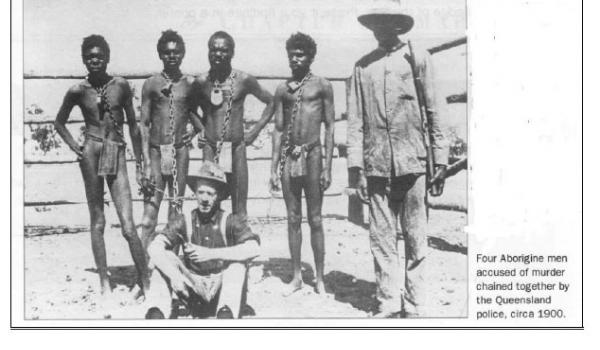
'Four Aboriginal men accused of murder chained together by the Queensland police (c1900)
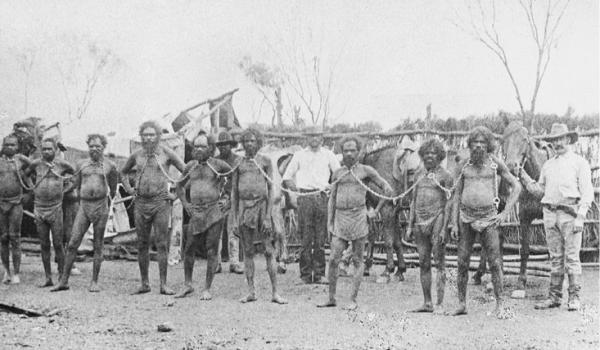
‘Chain Gang Western Australia’, photographer Alexander Morton, 1897; prepared by J. W. Beattie. Source: Tasmanian Museum and Art Gallery, Q1986.8.138.
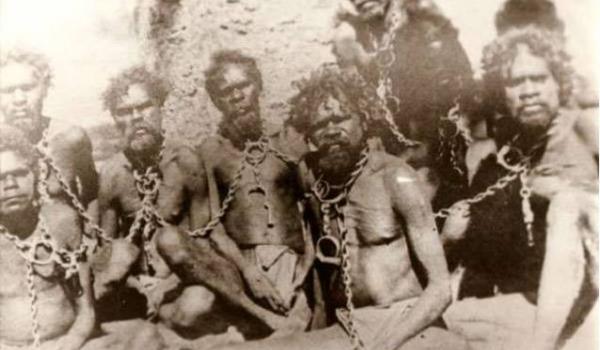
Details unknown
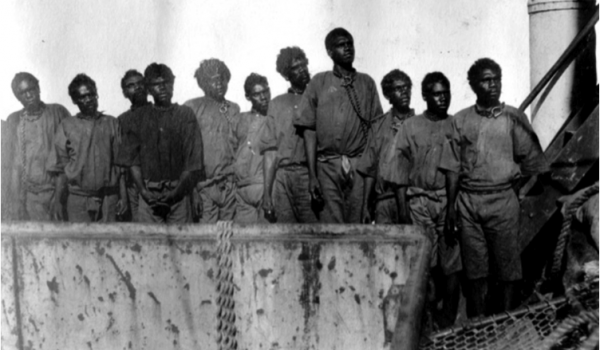
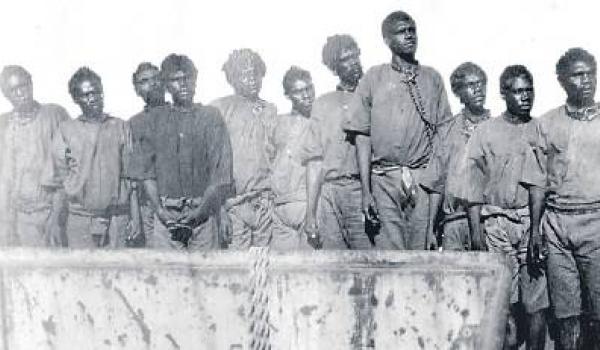
Aboriginal prisoners in neck chains aboard the vessel RMS N2, probably being transported to Wajemup (Rottnest Island). (State Library of Western Australia)
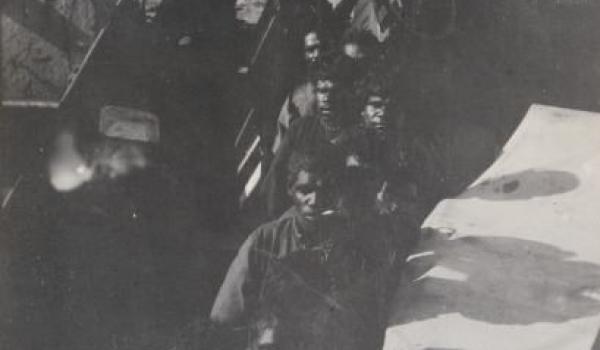
Native prisoners on RMS 'N2' WA State Steamshop Service
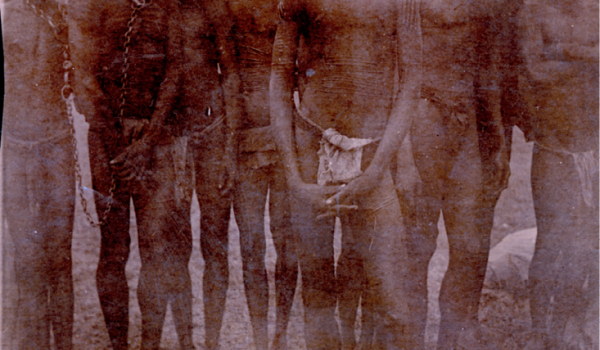
Kimberley or Pilbara WA - no details known
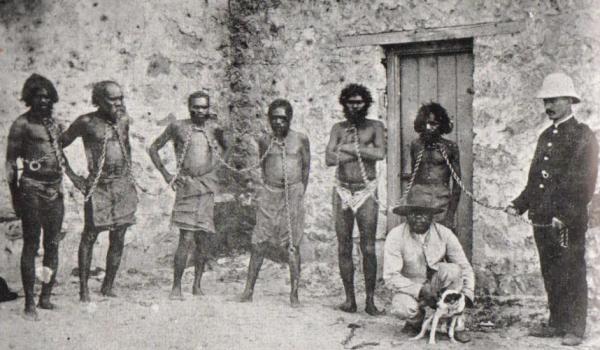
The only known information on this image is 'Captured for execution' Probably Kimberley or Pilbara WA
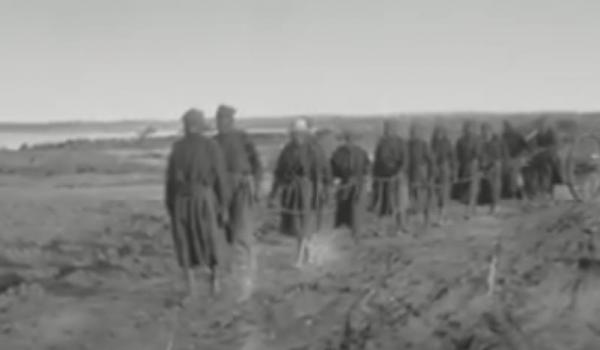
Kimberley Prisoners chained for long distance march to prison
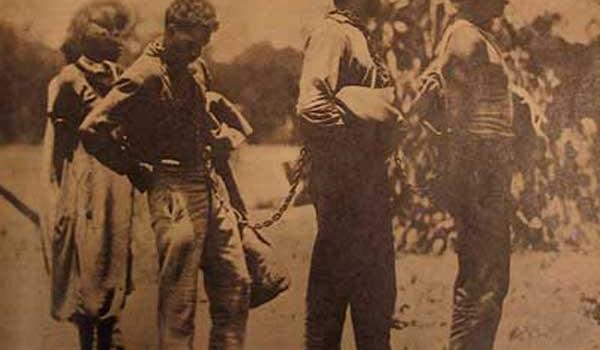
Men were captured as slaves and the women, known as 'Black Velvet', were used for sex in the Pearling Industry in the Pilbara and Kimberley Regions of Western Australia
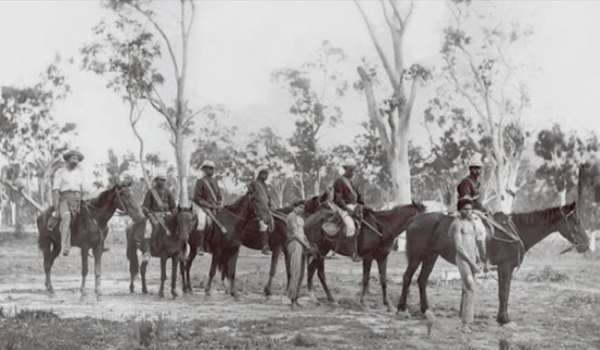
Cape York Peninsula Native Police patrol, c1900
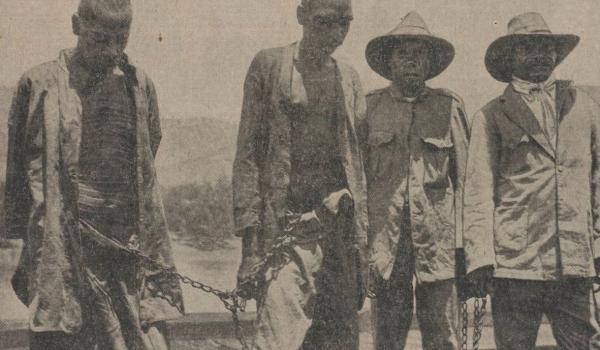
Lumbia (left) following his arrest in 1926. From ‘Natives Under Sentence of Death and Two Black Trackers’
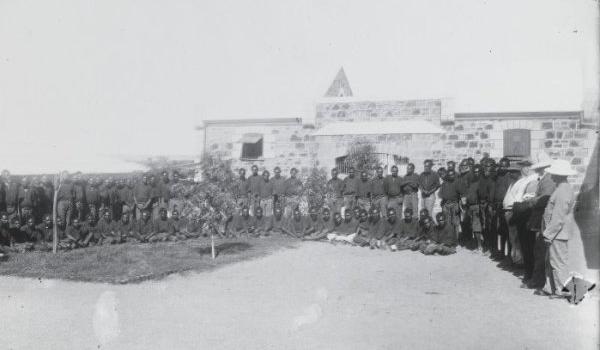
Aboriginal prisoners in the courtyard of the Rottnest Island Prison ca. 1883 (State Library of Western Australia, 6968B)
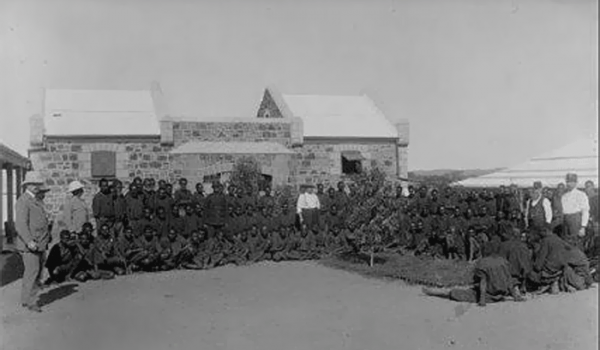
Aboriginal prisoners in the courtyard of the Rottnest Island Prison
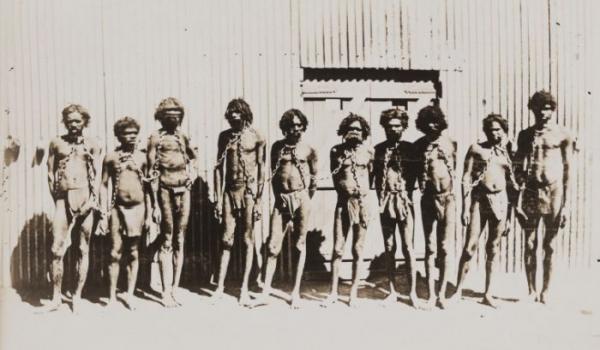
Aboriginal prisoners in chains (State Library of Western Australia 4497B/1)
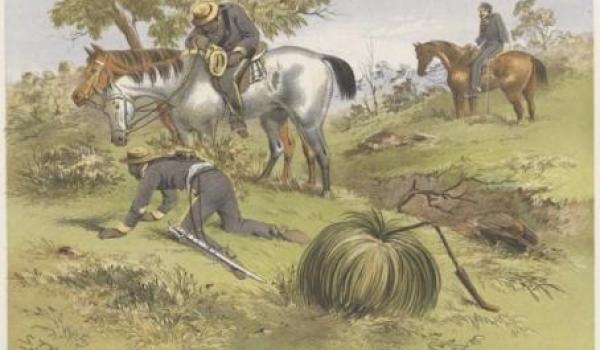
National Library of Australia picture an7149195. Native [Indigenous Australian] police in 1865
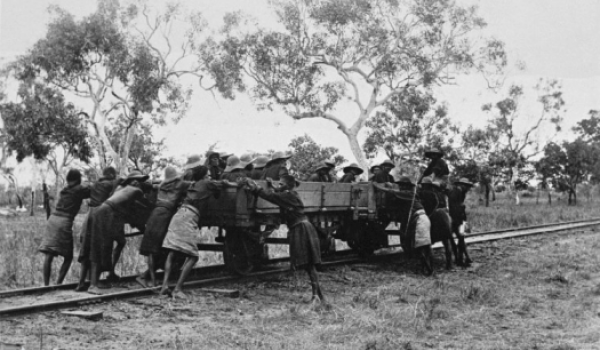
Aboriginal prisoners in chains in a railway wagon, Derby, 1897 (State Library WA)
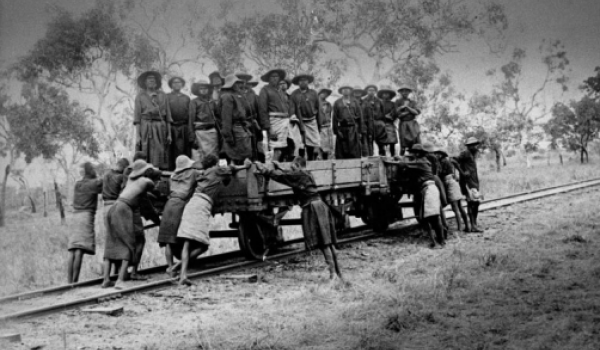
Aboriginal prisoners in chains in a railway wagon, Derby, 1897
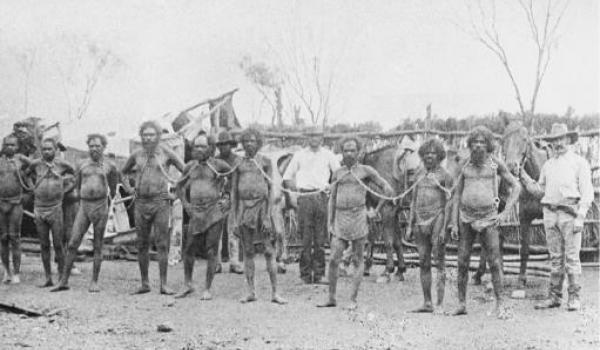
Chain Gang Western Australia', photographer Alexander Morton, 1897 (Tasmanian Museum and Art Gallery)
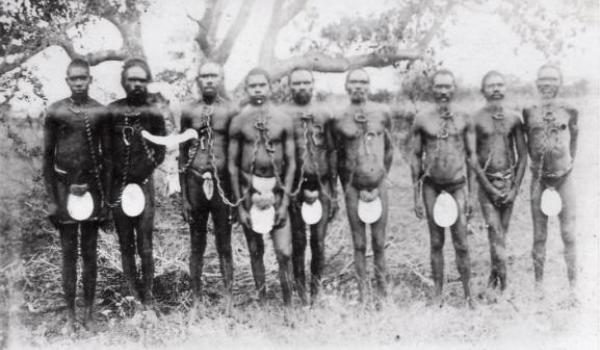
Unknown details - but could be from the Broome region, WA, captured by 'Blackbirders' to work in the Pearling Industry as they have Pearl Shells covering their bits
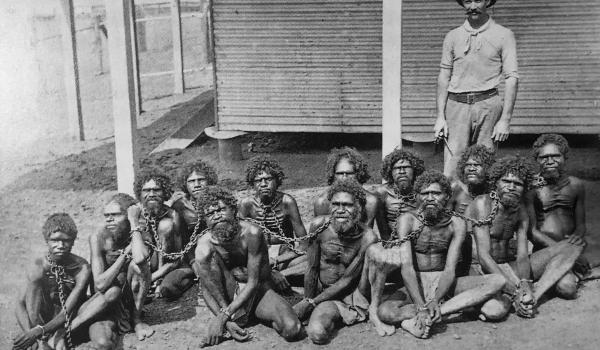
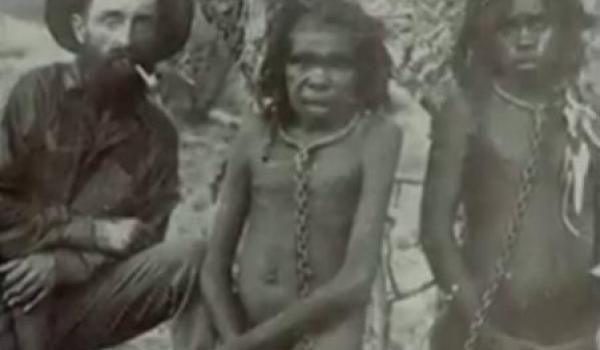
This image shows a boy in chains on the right. This image cropped without the boy may have been by accident or design, but arresting young boys was standard colonial practice. When Royal Commissioner Walter Roth asked why young boys of 14 where being imprisoned he was told by a police officer 'They are able to chuck a spear as well as any older man.'
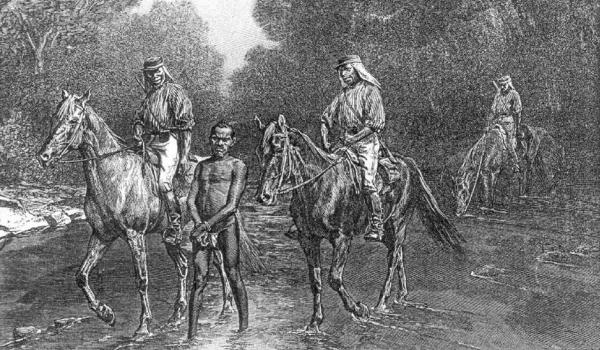
'Chez Les Cannibales, 1889' (Queensland Historical Atlas)
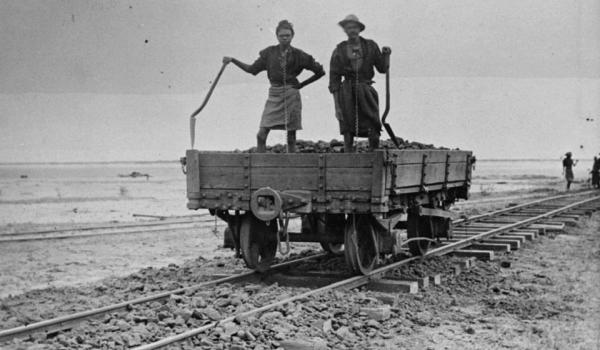
Prisoners in Chains - Derby railway West Kimberley WA 1897
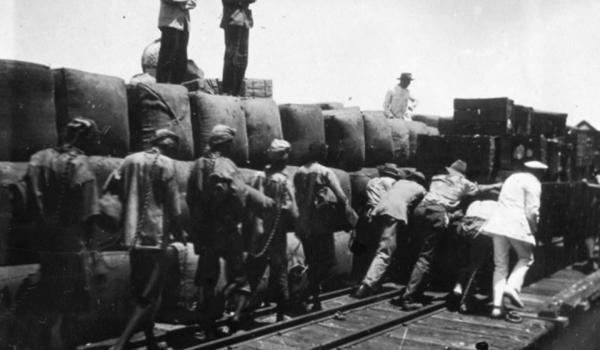
Chained aboriginal prisoners on Australia's wharf rail line circa 1920
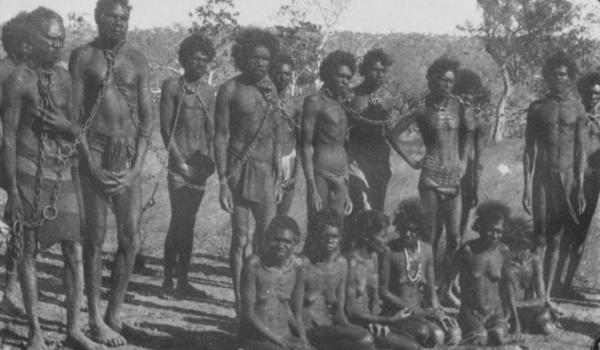
These prisoners were clapped in chains after allegedly being caught killing a farm animal near Wyndham, Australia, circa 1930
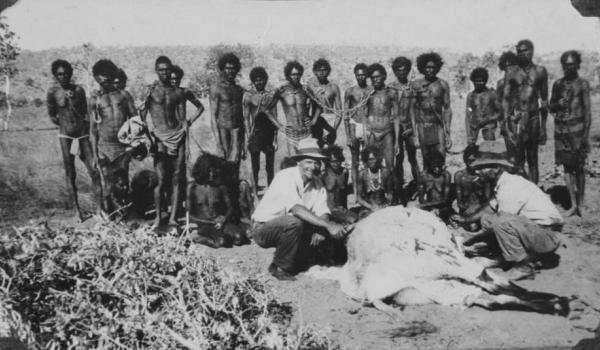
Neck chains were not phased out until the 1940s and continued to be used informally until the 1960s
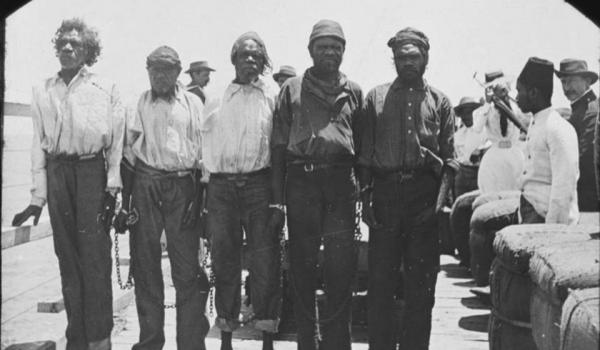
Aboriginal prisoners shackled by the wrists in transit in Point Samson, Australia, circa 1902
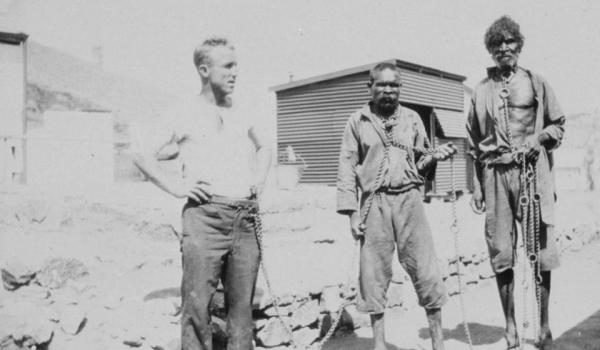
Aboriginal prisoners in neck chains with a white man holding the end of the chain, near Wyndham, Australia, circa 1930
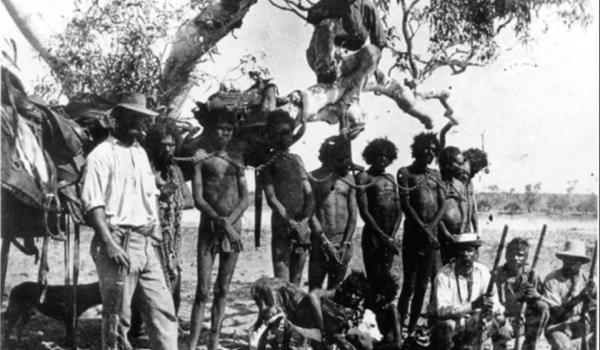
Chained aboriginal prisoners posed with a policeman and Aboriginal trackers, circa 1890
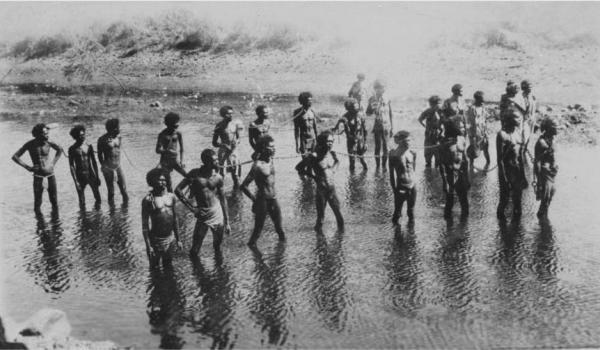
This picture is from around 1930
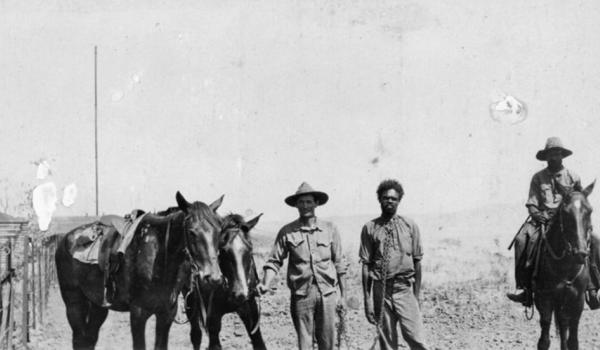
1910 WA
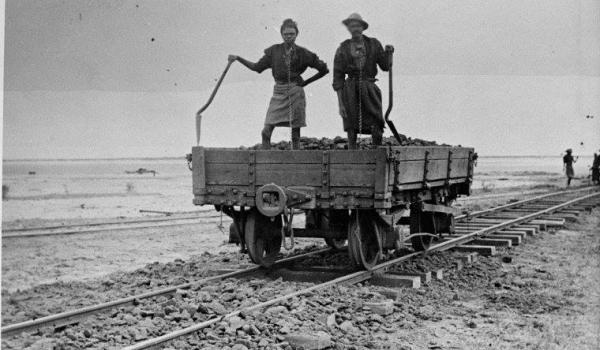
Aboriginals in chains, jetty railway ballast laying in Derby, West Kimberley WA, ca. 1897
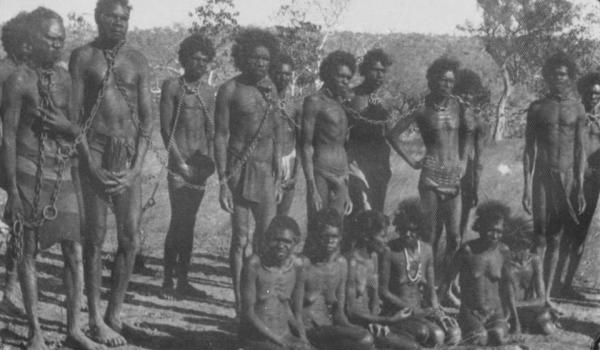
Captured for allegedly killing a farm animal near Wyndham, WA
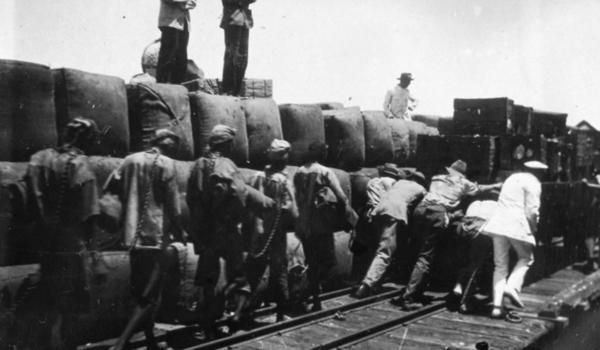
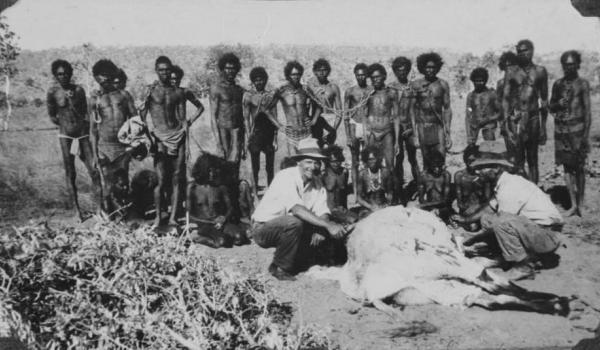
(Sate Library of Western Australia)
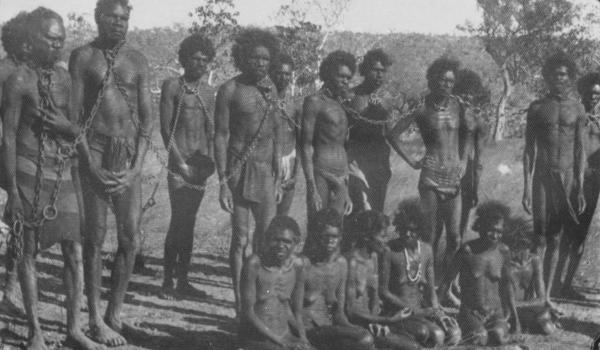
Captured for allegedly stealing a farm animal - Wyndham, East Kimberley WA (State Library of WA)
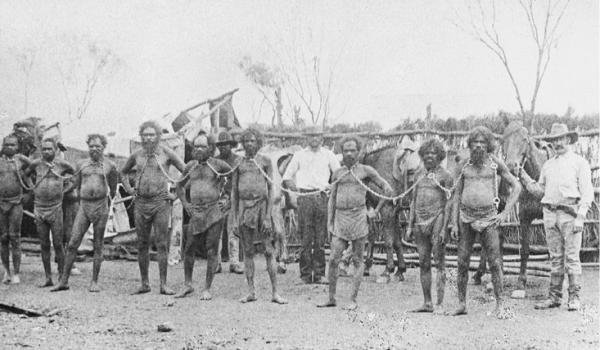
‘Chain Gang Western Australia’, photographer Alexander Morton, 1897; prepared by J. W. Beattie. Source: Courtesy of the Tasmanian Museum and Art Gallery, Q1986.8.138. ‘Chain Gang Western Australia’, photographer Alexander Morton, 1897
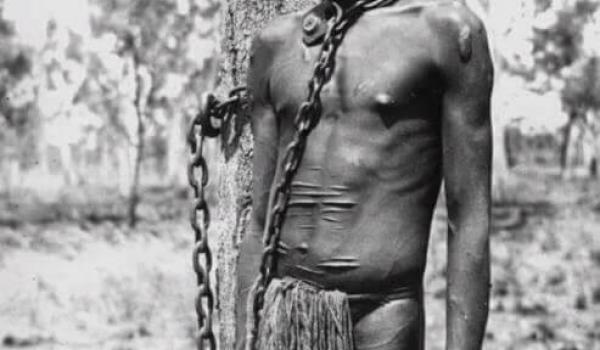
Queensland
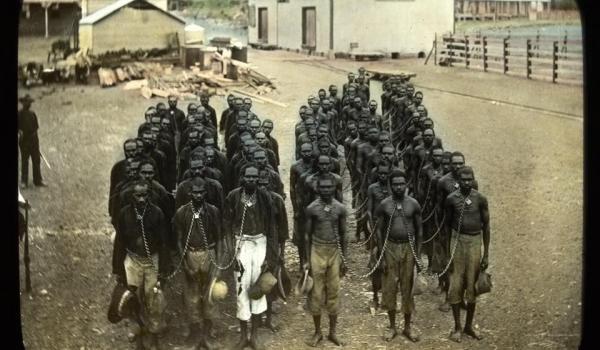
‘Aboriginal bathing gang in Wyndham’, The photo which is a ‘lantern slide’ has subsequently been colourised (and reversed) and is held, for reasons unknown, in the State Library of Victoria.
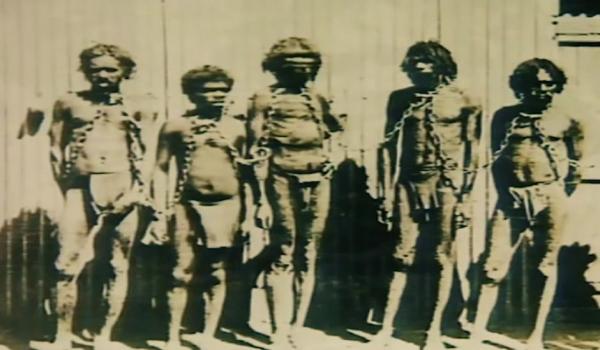
(State Library of WA)
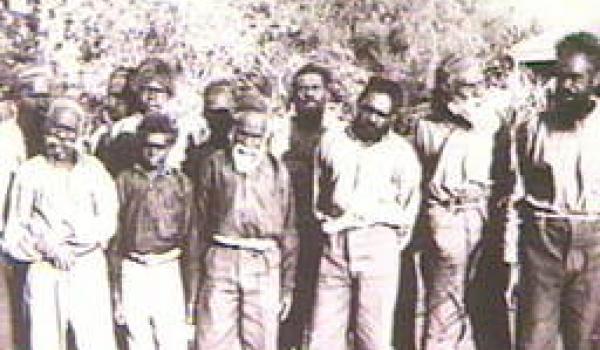
Group of Aboriginal prisoners at Alice Springs (State Library of South Australia)
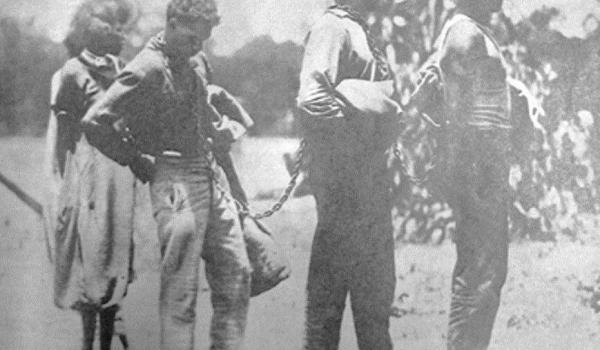
Queensland Australia 1956. Aboriginal people chained by the neck and being sent to Palm Island (then a penal settlement just north of Townsville). Aboriginal people were sent there from all over Australia throughout much of the 20th Century
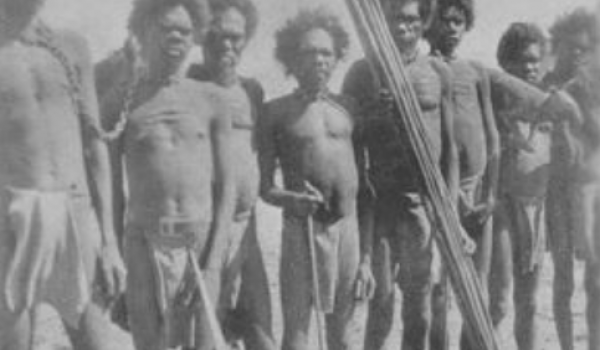
1901. Prisoners captured by police at 2/6 per head. Line of Aboriginal men chained together at the neck. (State Library of WA)
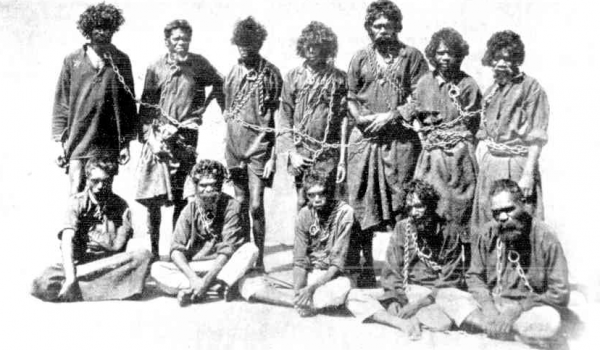
Aboriginal Prisoners in chains WA - From 'The Weekly Times' 27 July 107
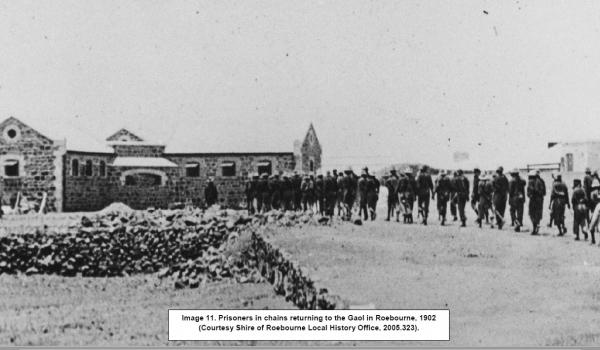
Prisoners of the North West were kept at Roebourne, usually on their way to Wadjemup (Rottnest Island Prison) Photo c1900 unknown details
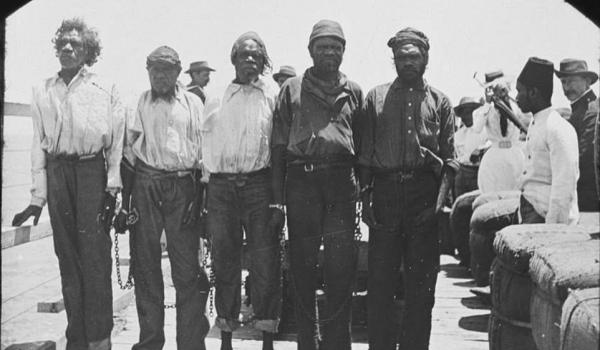
Photo c1900 unknown details
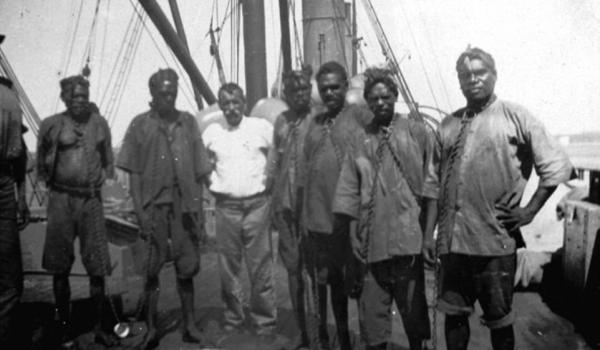
WA Aboriginal prisoners on steamship, either being taken to Roebourne or Rottnest Island Prisons
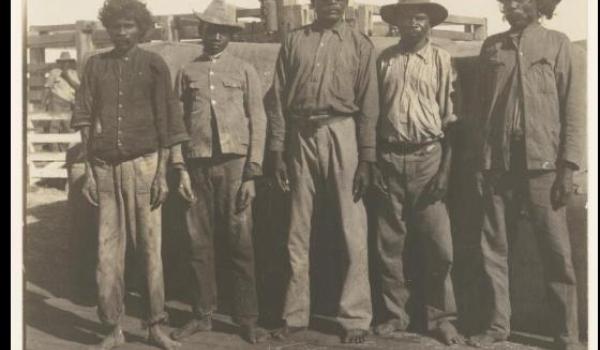
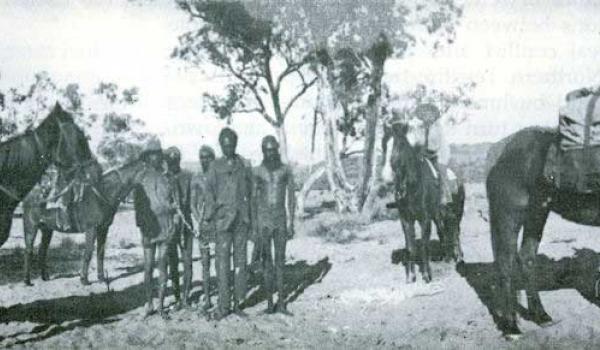
Beileived to be 'Five Aboriginal police trackers', Kimberley, Western Australia, ca. 1900
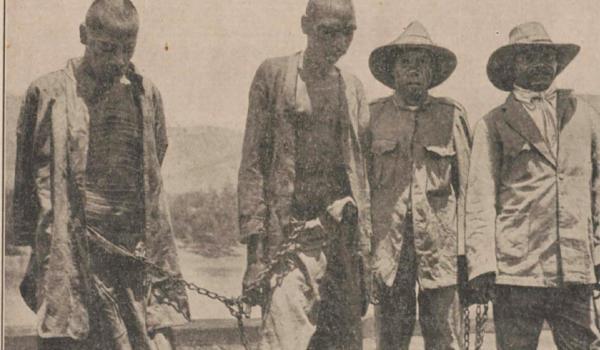
Two men sentenced to death and two black trackers - Wyndham WA. The man on the left is Lumbia, sentenced for the murder of pastoralist Fred Hay, which led to the 1926 'Forrest River Massacre' of Oombulgurri people
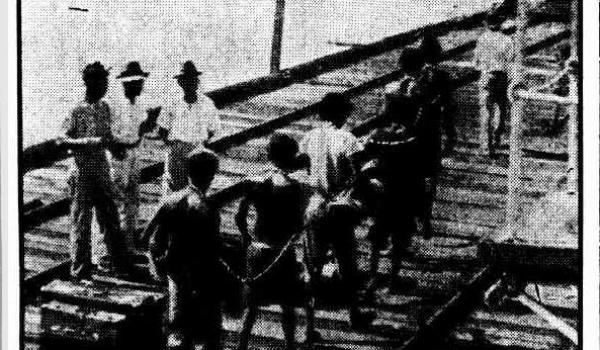
Convicted of murder and being transported to Broome - Wyndham jetty 1936
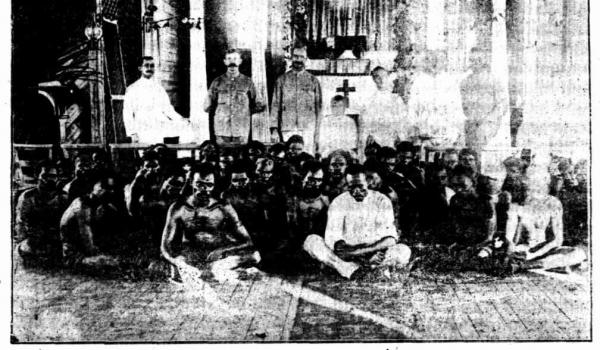
1909. Chained Native Prisoners in Nor'West Church.
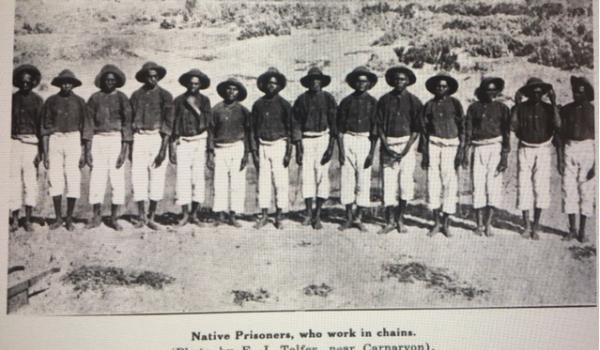
Native prisoners who work in chains near Carnarvon. Published 1939 "The First 10 years of the United Aborigines Mission 'UAM"
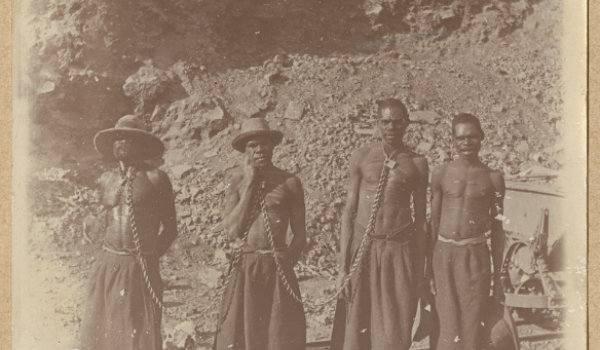
North Western Australia
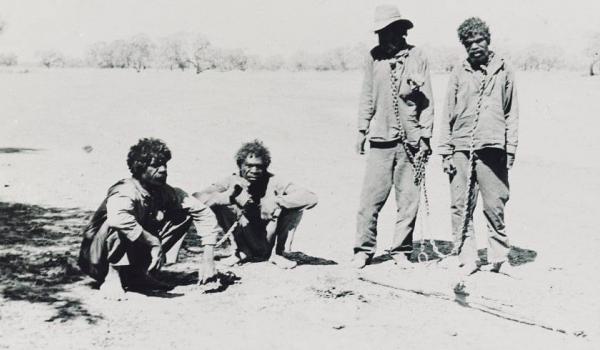
Wyndham, Kimberley WA 1947. Mirriwong men taken by police as they were suspected of suffering from Leprosy (Hansen’s disease)
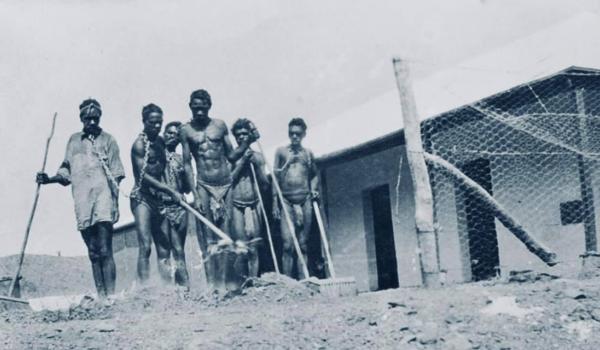
Halls Creek slavery c1817-1923
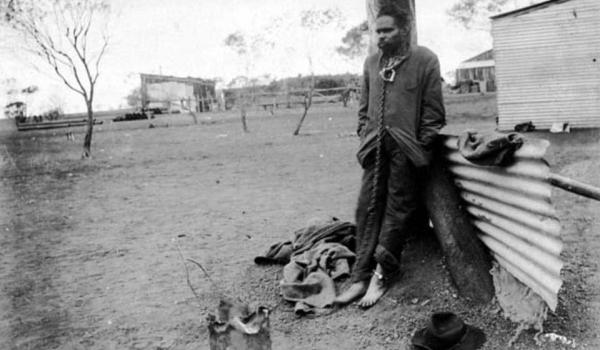
Western Australia 1895 - (State Library of WA)
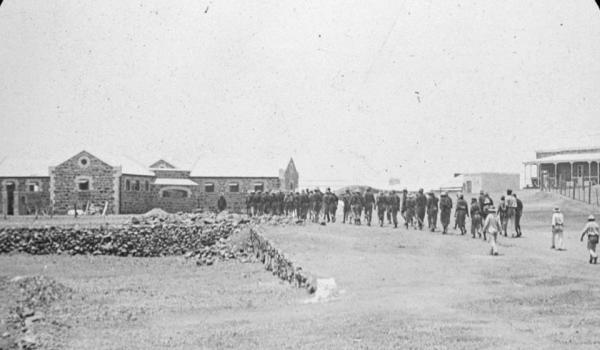
Chained Aboriginals returning to Cossack Jail, Australia, c1902 - (State Library of WA)
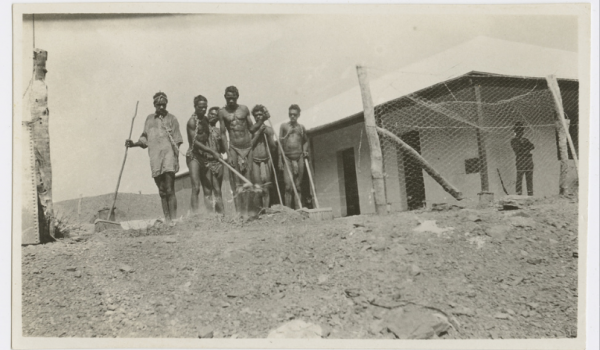
Six Aboriginal men in chains with tools in front of a Halls Creek Hospital (Photo: M.E. McCombe 'nursing days')
➡