Heritage

The Northern Basin Aboriginal Nations (NBAN) Media Release

Body
The Northern Basin Aboriginal Nations (NBAN) Media Release

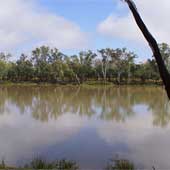
The Northern Basin Aboriginal Nations (NBAN) who represents the 22 First Nations in the Northern Basin, fully support Minister Hunters call for the extra promised 450 GL of Water to be delivered to the Murray Darling Basin. "By the Prime Minister moving the water portfolio from Environment to Mr Joyce's Agriculture, is equivalent to putting Dracula and his Vampires in charge of the blood bank" one of the delegates at the meeting said. He also said that "nobody will get any blood" we need to understand that this exact scenario is playing out in the Murray Darling at the moment.
Bennelong and Yemmerrawanyea singing in England

Body
Bennelong and Yemmerrawanyea

In a townhouse in London's Mayfair, near Berkeley Square, two Aboriginal men sing in their own language 'in praise of their lovers'. Their voices rise above the repetitive beat of the two hardwood sticks they clap together to maintain the rhythm. They wear fashionable Regency breeches, buckled shoes, ruffled shirts and waistcoats. The year is 1793 and the singers are Bennelong and Yemmerrawanne, far from their Wangal homeland on the south bank of the Parramatta River in Sydney. This was certainly the first time an Aboriginal song was performed in Europe ...

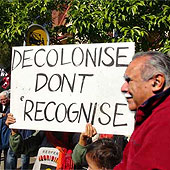
What is 'Decolonisation'? - How do we Decolonise?

Body
What is 'Decolonisation'? - How do we Decononise?

ne of the basic fundamental facets to achieve true decolonisation, that is, we must learn to decolonise our minds. This essentially means that we must stop thinking like our oppressor and thereby stop trying to fit a round peg in a square hole.

I say this because every time we talk about progressing forward in our ambition to achieve self-determination and independence, too often our people revert to saying: We have to ask the government, or we need to ask them for money.

Revealing the science of First Nations fermentation processes

Body

It is well documented that First Nations people knew how to make alcoholic drinks from sweet juices and nectars well before the European invasion, but little is now known about the processes involved, the yeasts and bacteria at work, or the chemistry, taste and smell of the plants and finished products, but now the University of Adelaide is investigating these traditional practices.