Tasmania's Black War: a tragic case of lest we remember?
Body
Nowhere was resistance to white colonisers greater than from Tasmanian Aborigines, but within a generation only a few had survived the Black War.


Nowhere was resistance to white colonisers greater than from Tasmanian Aborigines, but within a generation only a few had survived the Black War.
Henry Reynolds says the frontier war - his term for the violent dispossession of First Nations peoples - raises questions of global importance about the ownership of an entire continent
Chris Munro Tracker 5 July 2013
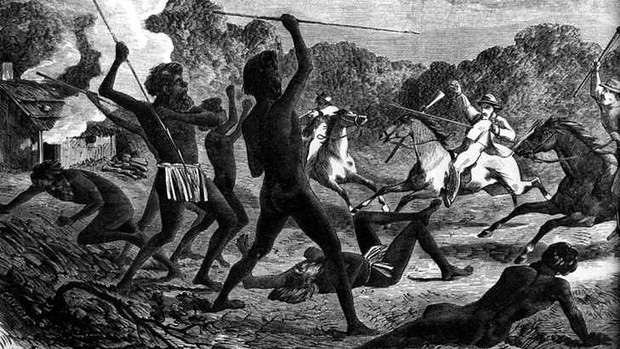
It is now 33 years since the Australian War Memorial (AWM) was first asked to consider recognising the "frontier wars". The suggestion came from an historian and consultant to the memorial, none other than Geoffrey Blainey.
Blainey's case is straightforward. It has now been established beyond doubt that armed conflict between black and white occurred across the continent over a long period of time, and was routinely referred to by participants and observers as a "war"; those conflicts were similar to other irregular warfare already commemorated by the memorial; so, the "frontier wars" should be commemorated also.
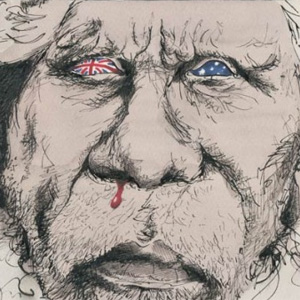
Australia Day stands as a reminder of massacres so why should Australia's First Nations People celebrate it?
This is not some John Howard "black armband" view of history, rather a white man's whitewash. You can shuttle history, but you cannot shuttle facts. It would be a great Australia Day if it faced honesty, historical facts, abandonment, hypocrisy, shelved superiority and embarked upon an exercise of spiritual empathy rather than religious hubris ...
In the light of the news about Australia's seat at the United Nations, it is sanguine to recollect what John Pilger said in 2012; "No country since apartheid South Africa has been more condemned by the UN for its racism than Australia."