Ancient sites

Human life in WA's Mid West existed 30,000 years ago, archaeologists say

Body

The first proof that humans lived in Western Australia's Mid West at the same time as humans in the Pilbara and South West regions has been found in a cave 50 kilometres north-west of Cue.
Previously, archaeologists had no established evidence that humans occupied the Mid West region more than 10,000 years ago. But charcoal associated with stone artefacts excavated in the Yalibirri Mindi rock shelter in the Weld Range have been shown to belong to ancestors of the Wajarri native title claimants living 30,000 years ago.

First Nation languages could reveal scientific clues to Australia's unique past

Body

The loss of Australian First Nation languages could obstruct access to unique scientific information regarding Australia's ancient geological history, according to a BBC reported.

Ancient legends on the continent passed down over millennia appear to verify recent scientific discoveries regarding Australia's ancient past. For example, cave art suggests an ancient knowledge of the heavens including beliefs in visits by ancient astronauts and a previously untapped record of natural history

New First Nations cultural rock painting sites found in the Grampians

Body

While undergoing conservation work on existing Aboriginal rock images in the Grampians, rangers stumbled upon two new previously unknown and unrecorded sites, conserving them will be the challenge. At one site a mixture of ochre and emu egg has been used across the top of a hand to create a stencil. While a series of figures and lines appear on a rock at another site. These were recently discovered by rangers in the Grampians while working in the fire affected areas. "The more we look the more we find," said Chief Ranger David Roberts.

Preservation or respect, The battle over the British Museum's First Nation Australian show

Body

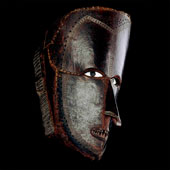
Should First Nations culture be preserved primarily in institutions, as too many paternal white politicians insist? Or is it best lived and nurtured in traditional lifestyles in home countries across the continent? It's been less than a century since the world's leading collectors began acknowledging First Nations art as more than mere ethnographic artefact.Since then, the most enlightened, from Hong Kong to London, New York to Paris, have understood that when you purchase a piece of First Nations art you become its custodian - not its owner.

Research findings back up Aboriginal legend on origin of Central Australian palm trees

Body

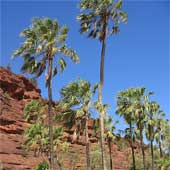
Several years ago Tasmanian ecologist David Bowman did DNA tests on palm seeds from the outback and near Darwin.The results led him to conclude the seeds were carried to the Central Desert by humans up to 30,000 years ago.Several years ago Tasmanian ecologist David Bowman did DNA tests on palm seeds from the outback and near Darwin. The results led him to conclude the seeds were carried to the Central Desert by humans up to 30,000 years ago.Several years ago Tasmanian ecologist David Bowman did DNA tests on palm seeds from the outback and near Darwin.

Research suggests First Peoples were firestick farming in North Queensland for up to 140,000 years

Body
First Peoples were firestick farming in North Queensland for 140,000 years

There has been evidence that the First peoples were on this continent 60,000 years ago, but the work of Dr Peter Kershaw's palynology (the study of fossil pollen) research suggests that the first peoples were on the continent as long ago as 80,000 years earlier than that.
When specks of prehistoric pollen and charcoal embedded in the ocean floor off the Great Barrier Reef were analyzed it was discovered an abrupt change in the fossil pollen was recorded around 140,000 years ago.

Tasmania: A Timeline of the History of First Nations People

Body

A comprehensive Timeline for the history of First Nations people in Tasmania. Also incded are some copies of John Glover's landscape paintings, including the Last Muster of Tasmanian Aborigines at Risdon. This painting tells the story of the last group of innocent Tasmanian Aborigines that remains in the Risdon Area before they were deported to Flinders Island. Glover thought the Tasmanian Aborigines would be extinct by that period of time, and when he died in 1849, there were only about 40 Tasmanian Aborigines still alive.

Adnyamathanha, the people of the rocks - songs, stories and Law

Body

Yulu's coal - part one - An amazing audio about "The People of Rocks" - The Adnyamathanha people from the Northern Flinders Ranges in South Australia. This program is about the journey of one of the major Adnyamathanha Creation Ancestors, Yulu the Kingfisher Man. Yulu’s Coal, explores the travels of Yulu as he moved across Country, followed by two Arkurra , Giant Rainbow Serpents and why the coal mined at Leigh Creek Coal Mine today belongs, from an Adnyamathanha perspective, to Yulu, the Kingfisher Man.

Slump in recommended First Nations sites receiving heritage listing in WA

Body
Burrup Rock Art
Burrup Rock Art

A steep drop in Aboriginal sites being added to WA's heritage register is leading to "a vast sea of ignorance" that will thwart heritage protection, according to Carmen Lawrence, the chair of the Australian Heritage Council.
After changing the heritage laws to favour mining companies, Aboriginal Affairs Minister said some places "presented as worthy of protection" were "of little or no interest" to Aborigines and that only "the industry of heritage professionals" appeared to value those sites.

How the First Nations people from the great southern continent saw the Stars

Body
Aboriginal Astronomy

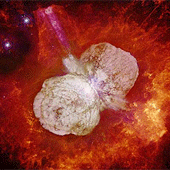
'Australian' First Nations people are the longest living continuous culture on earth, but modern researchers have just started to look at the wisdom that comes with the many thousand years of residency, and that's especially true of astronomy. They tracked and predicted interstellar movements in highly sophisticated ways, looking up at the night with eyes intriguingly different to our own. To hear some examples of things that they could teach us, I met with Swinburne University's Dr. Alan Duffy, who specializes in Australian First Nations astronomy.