


Caption 1
⬅
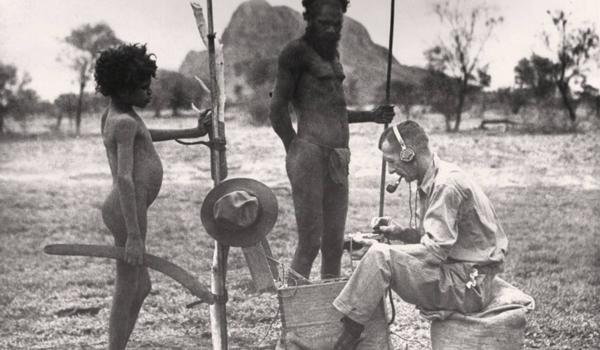
Reverend Kingsley Partridge, seated, using a Portable Pedal Radio at Haasts Bluff (known today as Ikuntji), Northern Territory, 1934
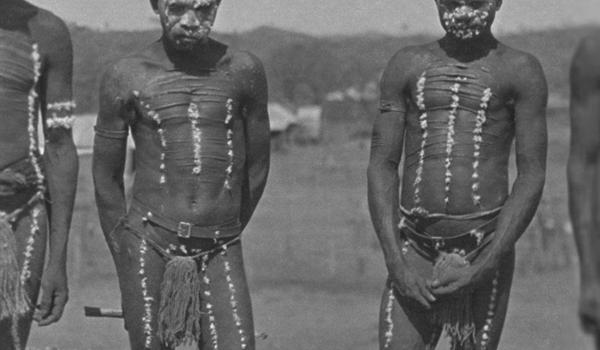
Men in traditional ceremonial dress in Port Hedland, WA, about 1930-35. Norman Henry James / IDIDJ Australia
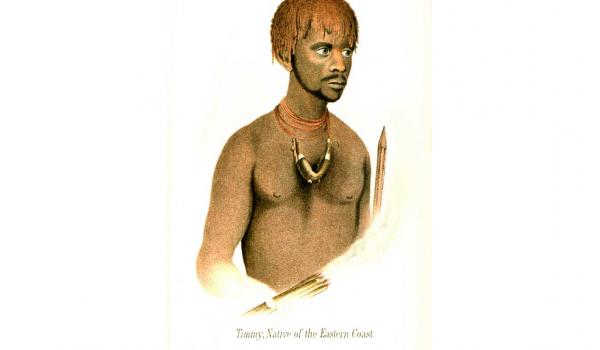
Timmy (Robert/Maulboyheenner) and his wife Jinny (Munginabitta/ Semiramis/Jenny/Numbloote) were removed to Flinders Island in 1835, where in 1839 Munginabitta died. Maulboyheenner was one of the group taken by Robinson to Port Phillip when he was appointed Chief Protector of Aborigines in 1839. Maulboyheenner was hanged in 1842. (Portrait studies from James Fenton’s History of Tasmania Hobart in 1884. This work was completed between 1831-35)
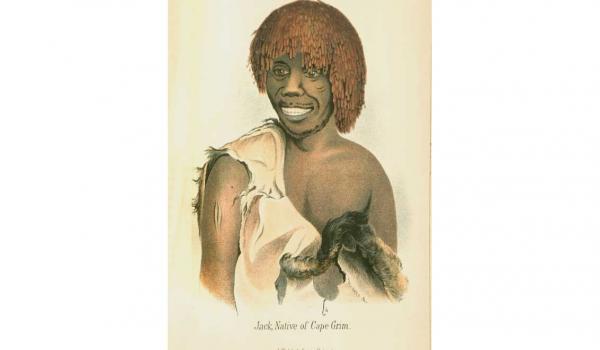
Jack(Pevay/Napoleon/Tunnerminnerwait) accompanied Robinson from 1830-35 on all the journeys he made to the north-east, the central plateau, the north-west and south-west coasts of Tasmania. With Maulboyheenner, Pevay was hanged at Melbourne Gaol for the murder of two settlers. (Portrait studies from James Fenton’s History of Tasmania Hobart in 1884. This work was completed between 1831-35)
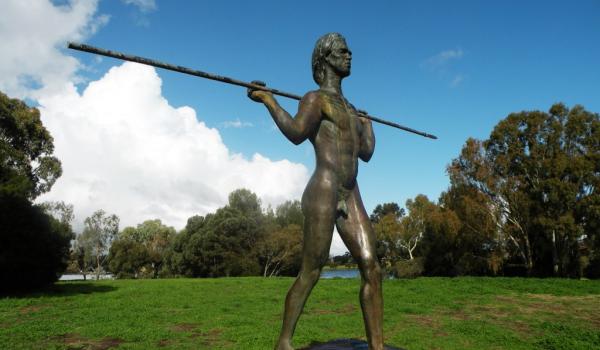
Yagan statue, Heirisson Island, Perth, Western Australia. The statue was sculpted in 1984 by Robert Hitchcock - Yagan c. 1795 – 11 July 1833) was an Indigenous Australian warrior. From the Noongar people, he played a key part in early resistance to British settlement and rule in the area surrounding what is now Perth, Western Australia.
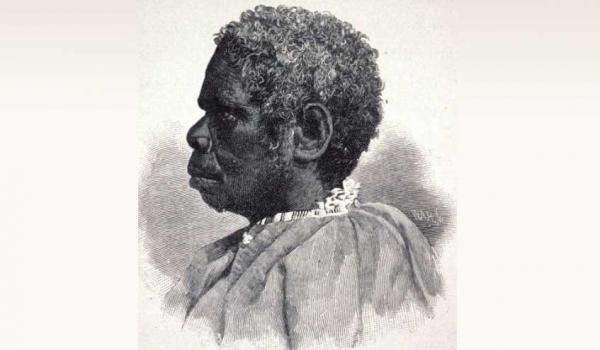
Truganini (Trugernanner, Trukanini, Trucanini) (1812?-76), daughter of Mangana, leader of a band of the south-east tribe in Tasmania. She was relocted to Victoria in 1835 and was a member of 'The Freedom Fighters', her accomplices were hanged were hanged for murder but she was set free.
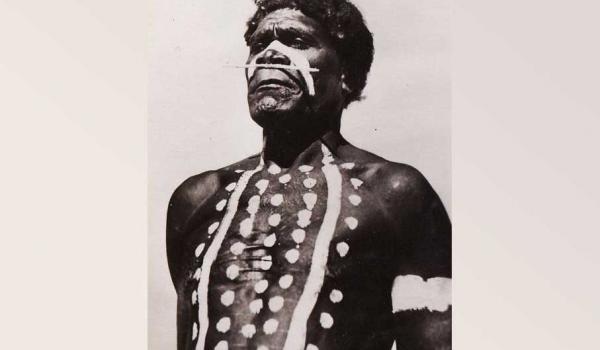
North Queensland warrior c1950's - Further details unknown
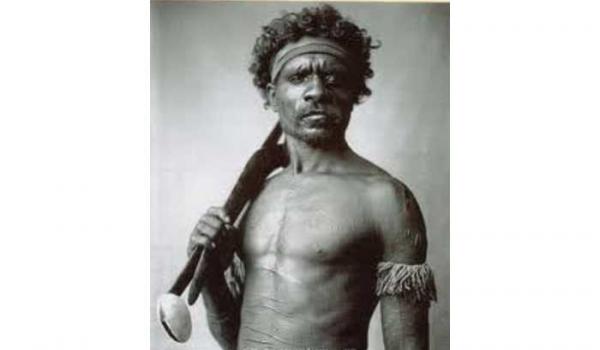
Believed to be an unidentified NQ warrior captured by Henry King c1900 - He holds a shell tipped spear-thrower of the Cape Grenville type, and a boomerang, with the band representing his clan - This image is often reputed to be Pemulwuy NSW Warrior
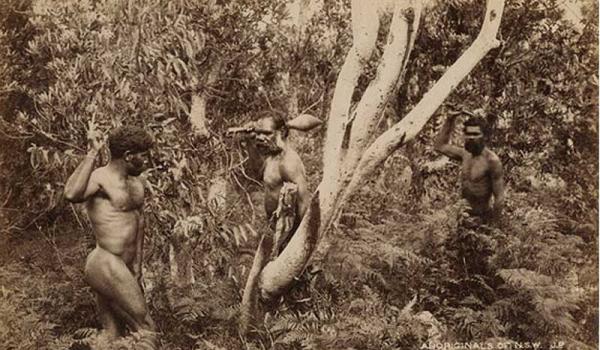
John Paine Aboriginal warriors NSW - paper photograph 13.5 x 20 cm - no other details known
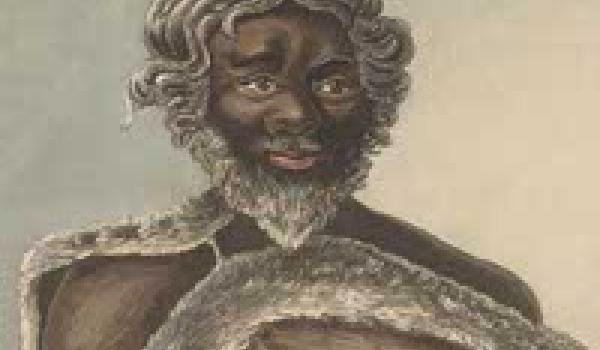
Windradyne - Wiradjuri Warrior (thought to be)
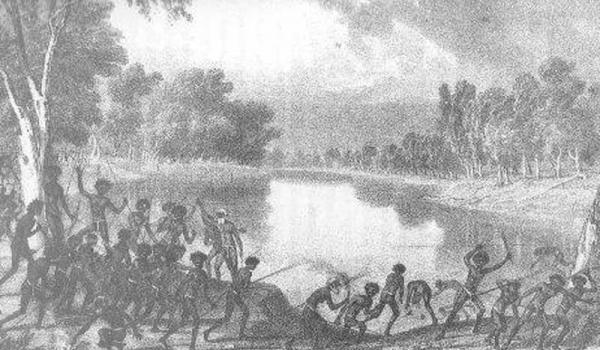
'Three Expeditions into the interior of Eastern Australia' by Thomas Mitchell - Plate 26 - 'The river murray and dispersion of natives 27th May 1838' Major T.L. Mitchell del. J. Brandord and G. Barnard Lith. J. Graf Printer to Her Majesty. (Published by T. and W. Boone, London)
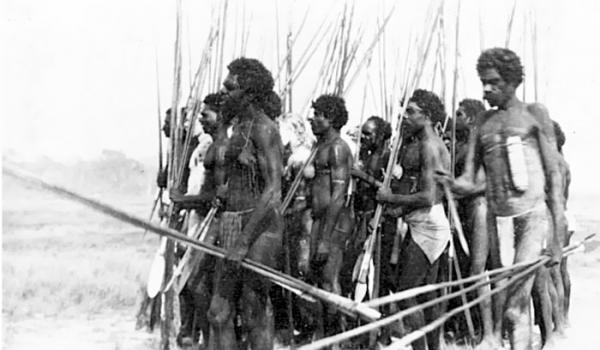
Aborigines from Arnhem Land, Northern Territory, c1920s. The pattern of frontier violence that had developed in the east and south of the Australian continent was still evident in the Northern Territory and Kimberleys in the early decades of the 20th century. As late as the 1930s Europeans were encountering armed resistance from Aborigines in Arnhem Land, east of Darwin. Source: Fryer Library, Ernestine Hill Papers, UQFL18, Box 30, Env 6 [b19733616]
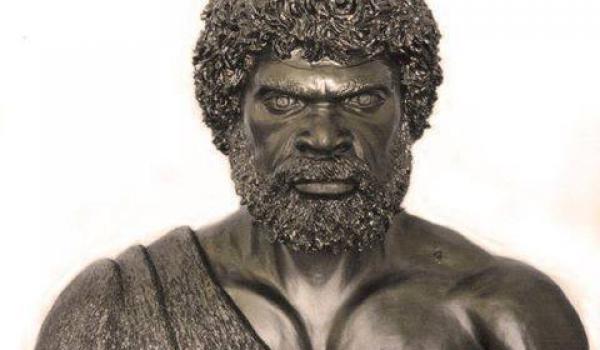
Pemulwuy ,He was a member of the Bidjigal clan of the Eora people (a coastal Aboriginal people). Pemulwuy was the fiercest resistance leader to the European invasion of Australia, which began with the arrival of what is called the First Fleet in 1788.
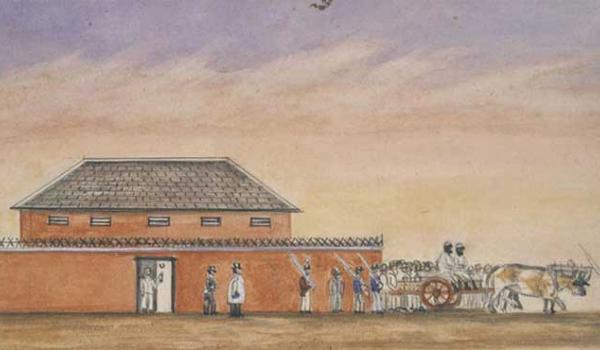
'The first execution' 1875 by WFE Liardet - Transporting The Freedom Fighters Tunnerminnerwait and Maulboyheenner to their hanging place (State Library of Victoria)
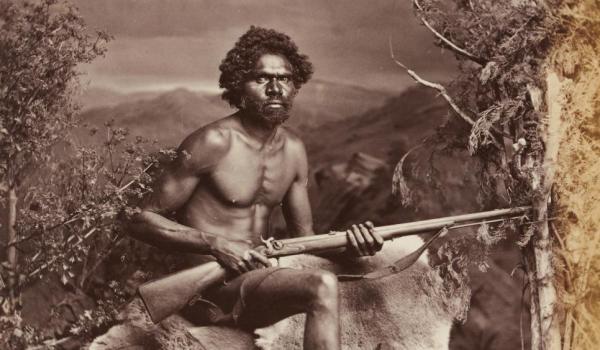
No title (Aboriginal man holding a gun) (c. 1873) no. 18 from the Australian Aboriginals portfolio (c. 1873) J. W. LINDT
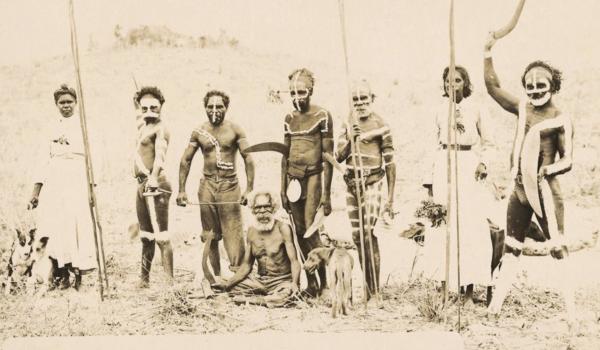
Kimberley or North West region of Western Australia about 1900, showing the traditional dress and weapons of Aboriginal warriors - Restored and enhanced by IDIDJ Australia
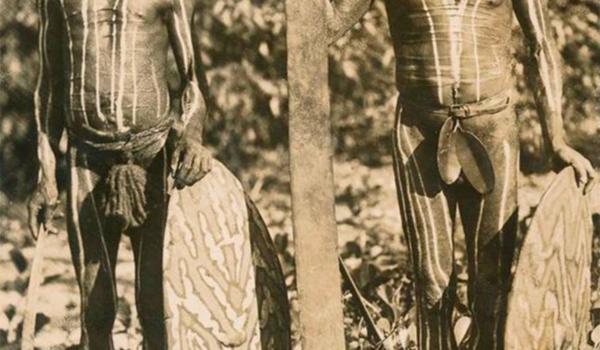
Rainforest men with decorated fig shields called 'magurra' and one holding a sword club, photographed in Far North Queensland in the 1800s. - Restored and enhanced by IDIDJ Australia
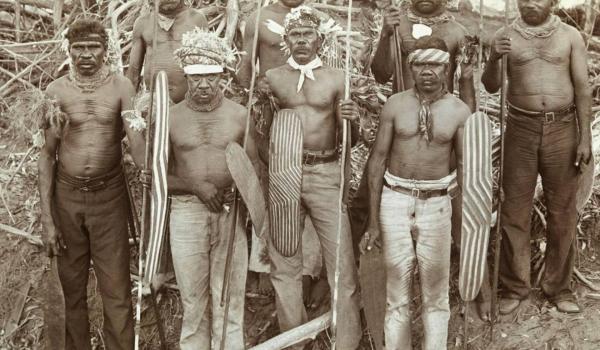
Warriors, hunters and lore men from the Carnarvon region of Western Australia, in 1906 - Dr T. H. Lovegrove / IDIDJ Australia
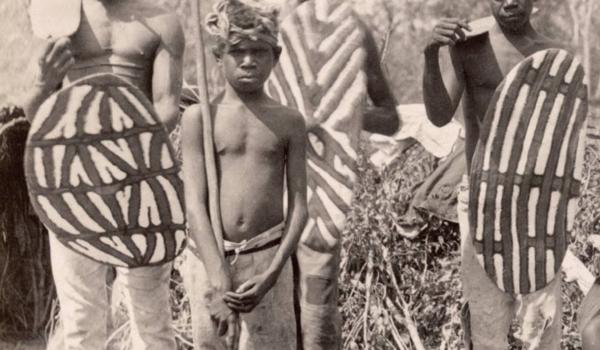
150 year old restored image by IDIDJ Australia
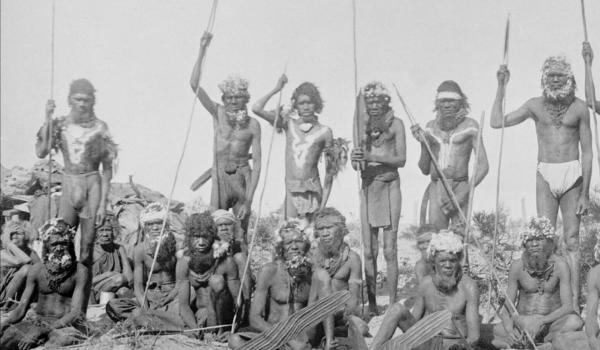
A group of warriors show their hair ornamentation in Western Australia in 1895 - Restored by IDIDJ Australia
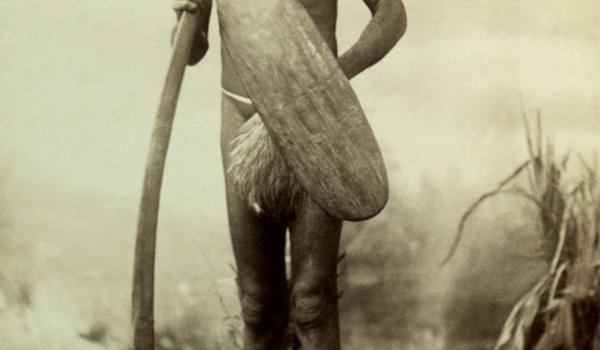
acky Yeralena also known as Caldi Caldi from between Lake Eyre and Lake Blance in South Australia, 1892. He is shown with long, hand-held, fighting boomerang and shield - James Taylor / IDIDJ Australia
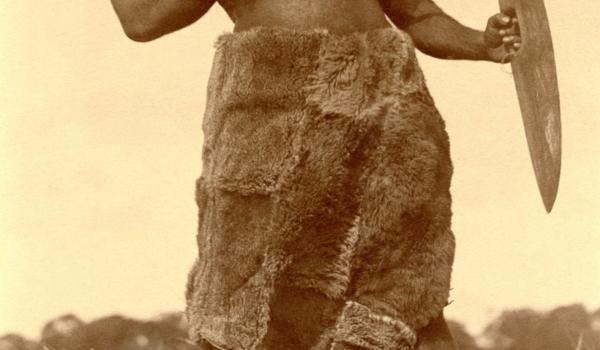
Ngarrindjeri man Louis Ngulgare with reed spear (kaike), spearthrower, shield and kangaroo skin cloak at Point McLeay, South Australia, in 1875 - Samuel White Sweet / IDIDJ Australia
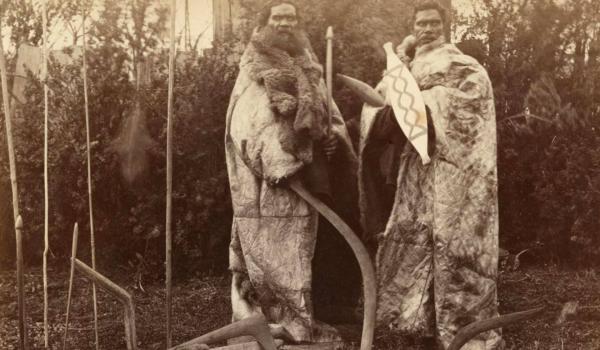
Kulin nation men, Victoria, in 1883. Beneath the possum skin cloaks would be highly patterned cicatrisation/scarification on the chest and shoulders marking men of high distinction - Fred Kruger / IDIDJ Australia
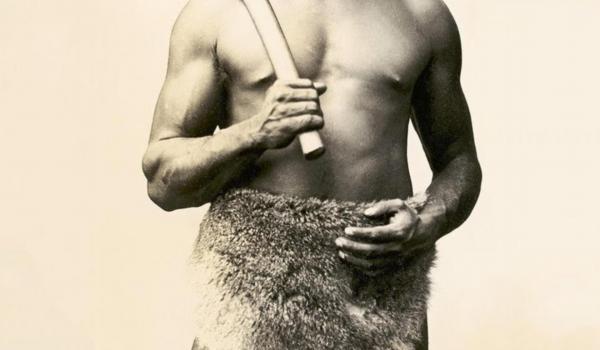
Unknown NSW Warrior in 1887 - Charles Kerry / IDIDJ Australia
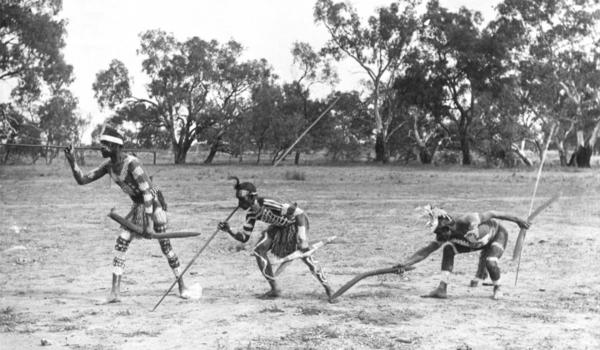
This photo likely shows men tracking game, going by the handwritten annotation on the bottom left. Taken about 1900 - Charles Kerry / IDIDJ Australia
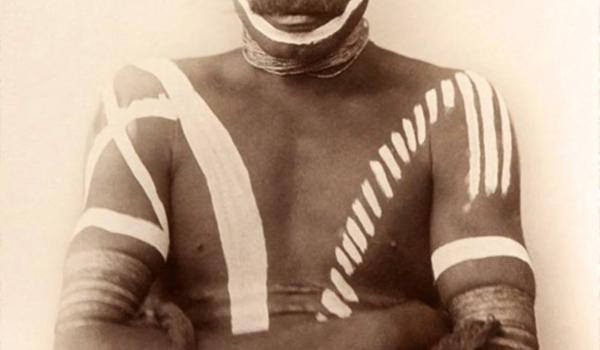
Warrior from Port Darwin, Northern Territory, in the late 1800s. Charles Kerry / IDIDJ Australia
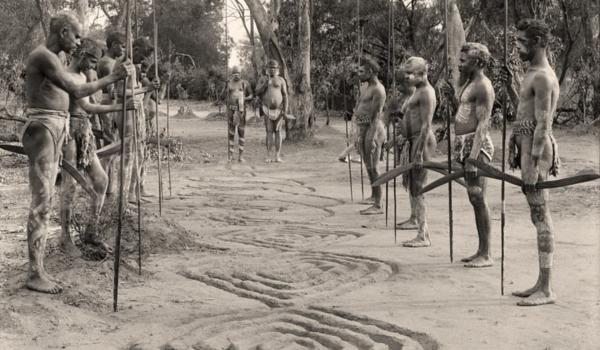
Bora ceremony showing sand sculpture design at Quambone Station, NSW in 1898. Charles Kerry / IDIDJ Australia
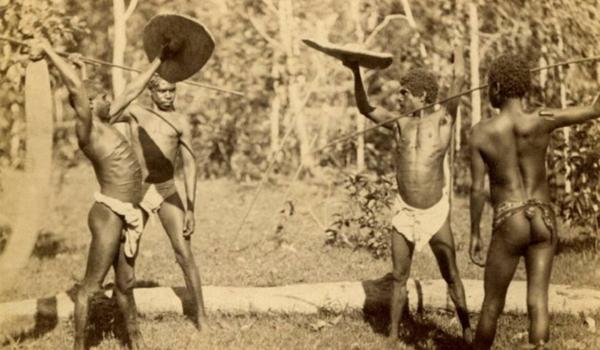
Four rainforest men demonstrating the art of combat, Far North Queensland, in the late 1800s to early 1900s.
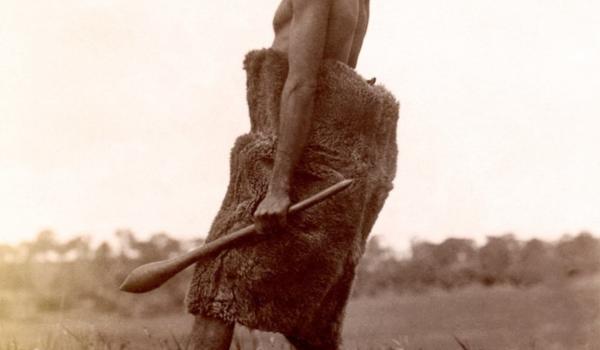
Ngarrindjeri or Kaurna elder wearing a kangaroo cloak in a manner suggesting warmer weather, carrying a club in one hand and a spearthrower at the ready in the other, South Australia, in the late 19th century
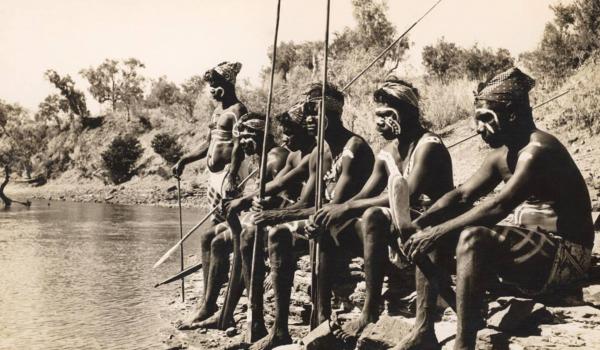
en watch for crocodiles while waiting for a ceremony at Victoria River, NT, in 1952. Arthur Groom / IDIDJ Australia
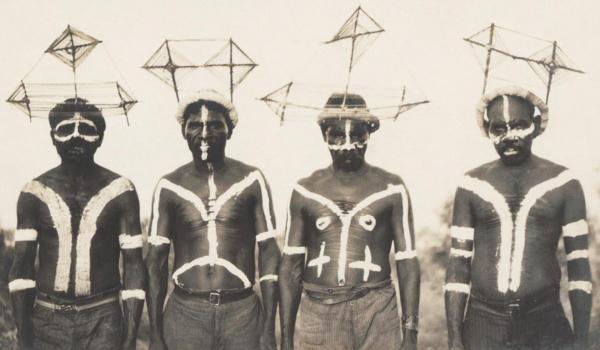
Dancers wearing head ornaments called waninga in Broome, Western Australia, about 1926. R. A. Bourue / IDIDJ Australia
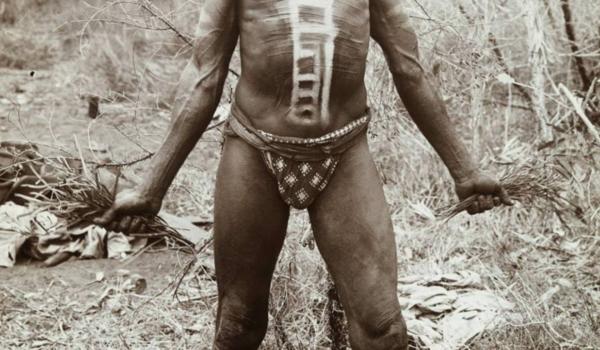
warrior in ceremonial body paint form the Carnarvon region of Western Australia in 1906. Dr T. H. Lovegrove / IDIDJ Australia
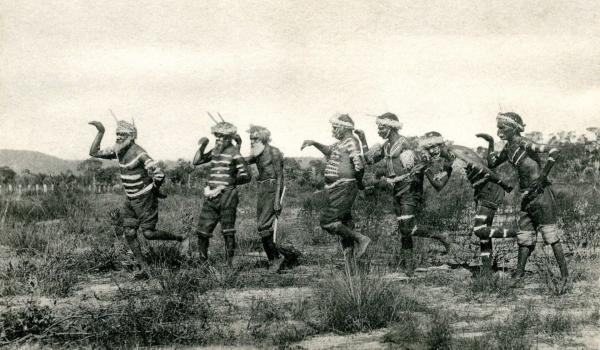
Noongar men performing an emu dance near Perth, Western Australia, in 1905. Third from left without body paint is Joobaitch, fourth from left is Monnop. Other individuals likely to include Woolber, Genbursong and Dool
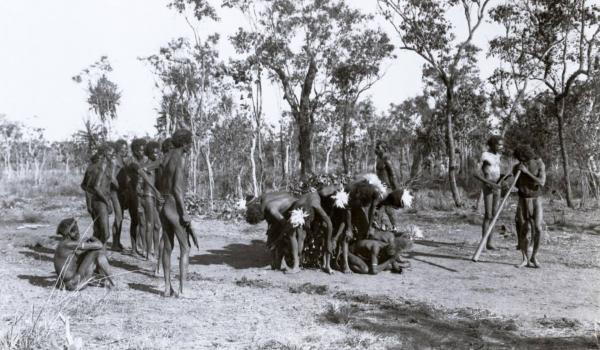
One of the earliest known photographs of a didgeridoo, here in use among the Gagadju where it is known as 'jiboulu' in the Alligator River region, Northern Territory, in 1901. Baldwin Spencer / IDIDJ Australia
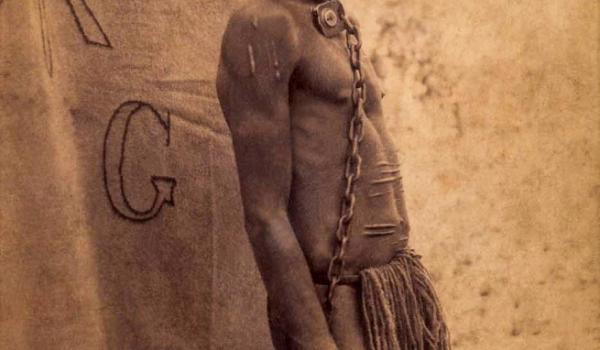
Cumjam, an Aboriginal man accused of murdering Ferguson at Mentana, standing chained by the neck to a tree, Queensland, March 1894 (Pic Alphonse Chargo)is
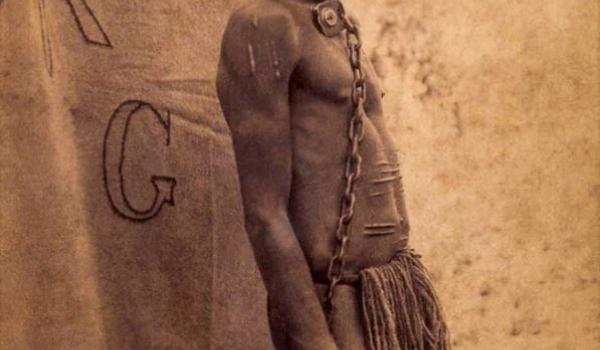
Warrior Cumjam was accused of a reprisal killing of a 60 year old stockman at Mentana, standing chained near Government issued tent, Queensland, March 1894. (Pic Alphonse Chargo)
➡