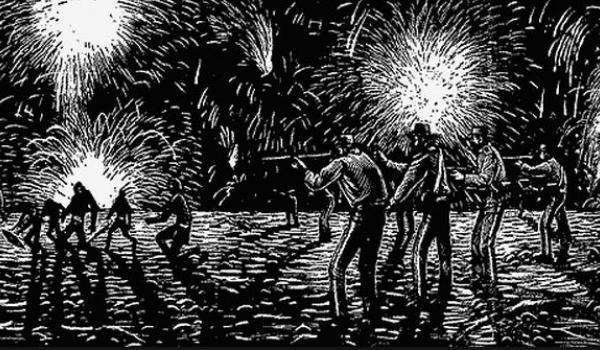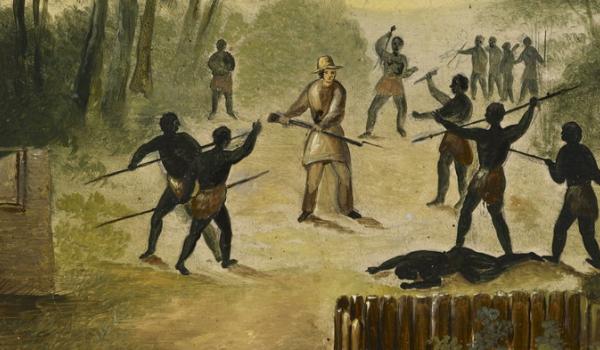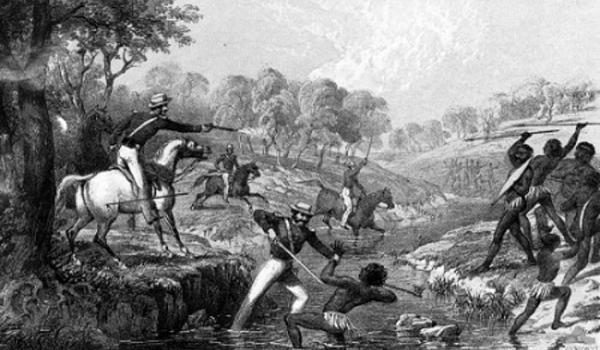
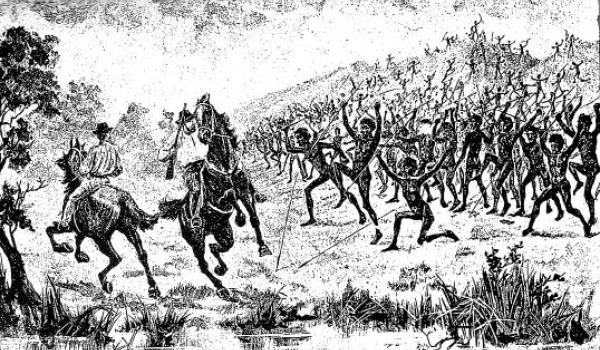
'Mounted Police and Blacks' depicts the killing of Aboriginals at Slaughterhouse Creek by British troops. Australian War Memorial image ART50023
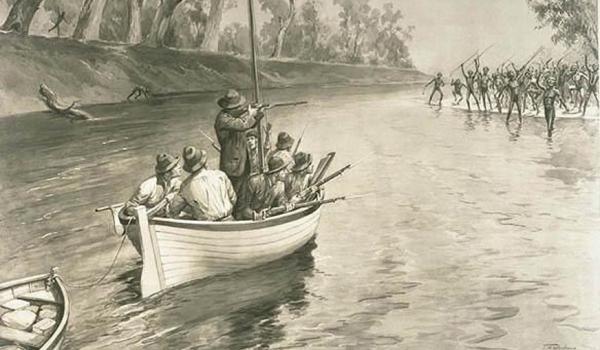
An illustration of the explorer Charles Sturt's party being "threatened by blacks (sic) at the junction of the Murray and Darling, 1830", near Wentworth, New South Wales. National Library of Australia picture nla.pic-an9025855-1. 'Sturt's party threatened by blacks at the junction of the Murray and Darling, 1830'.
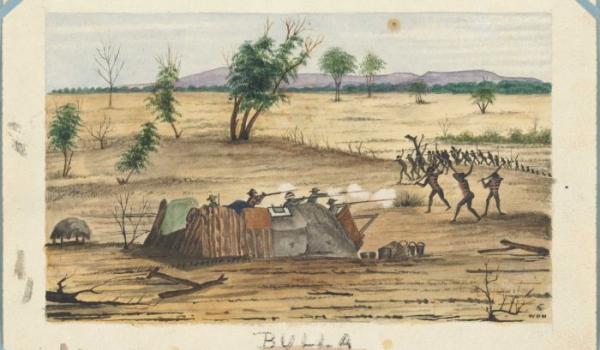
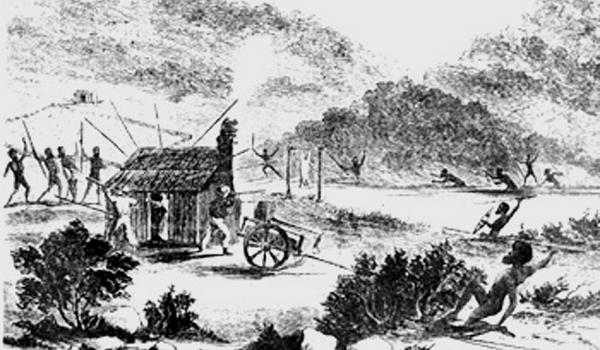
Bulla Queensland 1861 conflict Settlers under attack from Aboriginal tribe. watercolour by W.O Hodgkinson (National Library of Australia)

During the 1830s, the Christian missionary George Augustus Robinson negotiated a peace with some of the Tasmanian Aboriginals, following serious conflict between them and British settlers. The peace resulted in the exile of around 100 Aborigines to nearby Flinders Island to be taught European ways. Ravaged by disease, few ever returned to Tasmania alive. 'Benjamin Duterrau (1767 - 11 July 1851)'
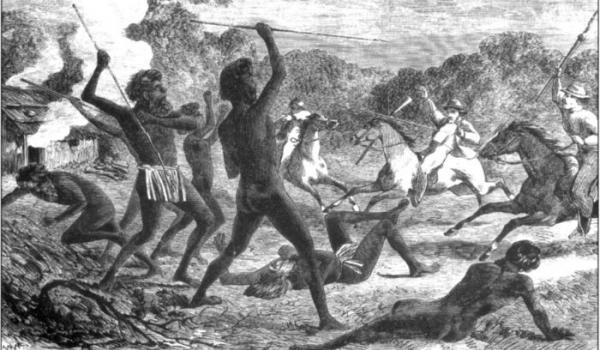
Fig. 3: Australian Aborigines — War. [Calvert Collection, Mitchell Library, State Library of New South Wales.]
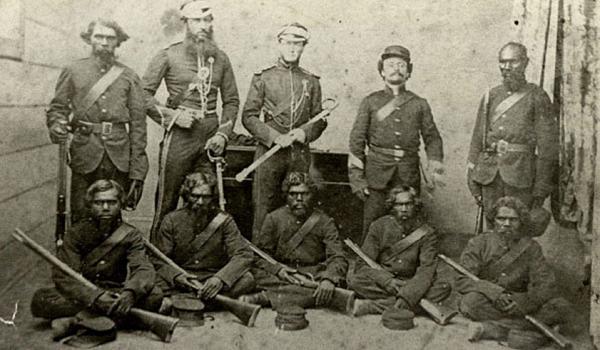
The Native Police Forces were established in Port Phillip in 1842 in New South Wales and 1859 in Queensland. The force was built up of young Aboriginal men who were sent to kill Aboriginal people of different language groups. This was a vital contribution to the defeat of the Aboriginal resistance.
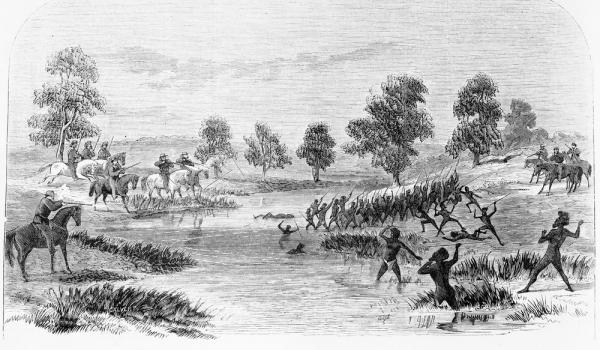
Known as the Rufus River Massacre (State Library of Victoria, IMP27/07/66/308, engraving by Samuel Calvert)
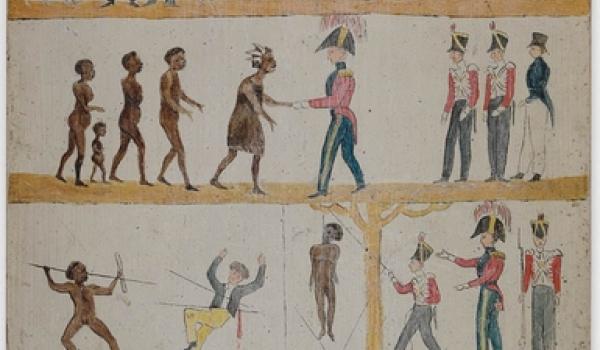
Caption Governor Davey's [sic - actually Governor Arthur] Proclamation to the Aborigines, 1816 sic actually c.1828-30 (State Library of NSW)
NSW c 1799 - Beginning of a six-year period of resistance to white settlement by Aboriginal people in the Hawkesbury and Parramatta areas. Known as the 'Black Wars'.
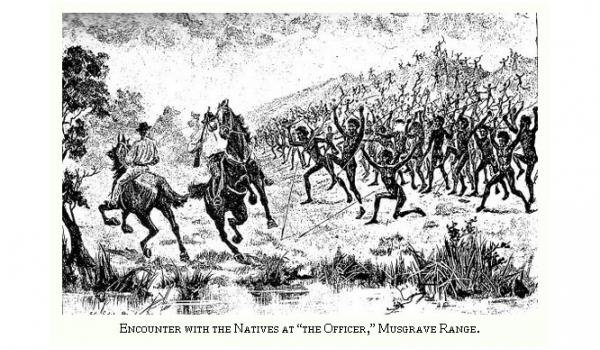
Encounter with the Natives at 'the Officer', Musgrave Range [SA and NT border]. The Romance of Exploration by being A Narrative Compiled from the Journals of Five Exploring Expeditions into and through Central South Australia, and Western Australia, From 1872 to 1876. by Ernest Giles
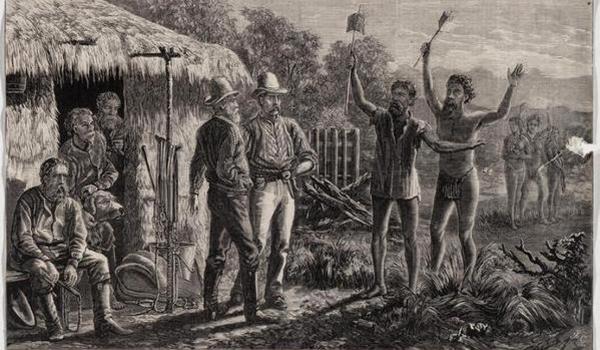
Title: 'Arrival of blacks with a flag of truce ... Queensland.' This image infers that First Nations people didn't fight to the end. Perhaps some didn't, but there are many records where the first nations warriors fought to their end.
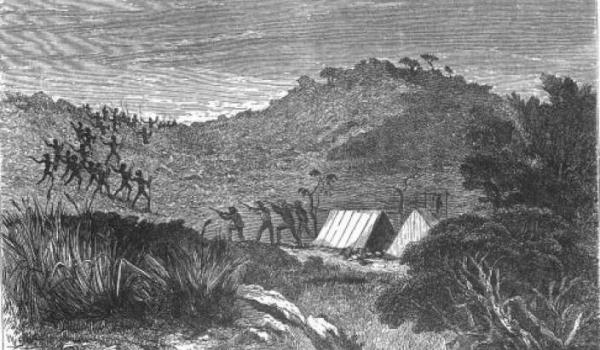
A drawing of the John Forrest story at the Canning stock route where they admitted to hogging the water hole ... Back to reality: “It was night time, ….. old people sitting down around fire singing. 20 yards away old people saw him, a white one. One man got up and tried to spear him, they shot him, then shot another. Next day old people tried to come to get water at the spring. They had built a fort, biggest mob came in – they killed ‘em, dragged ‘em like a dog..” (Senior Martu man, 2010)
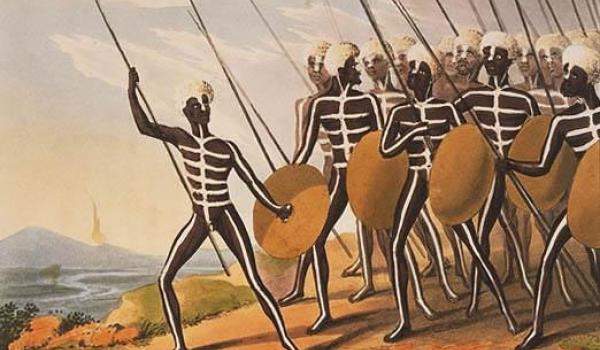
Warriors of New South Wales by Dubourg, M., fl. 1786-1808 - National Library of Australia
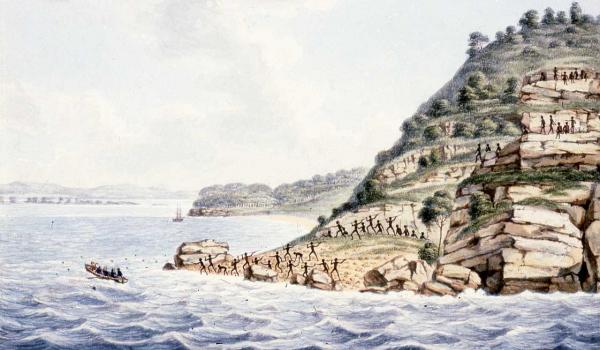
"Aborigines with spears attacking Europeans in a rowing boat" a watercolor by Joseph Lycett, c 1820 (Sydney Museum)
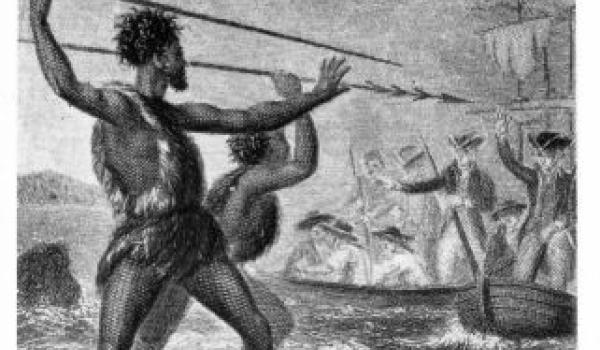
"Resolved to defend their coasts to the uttermost"
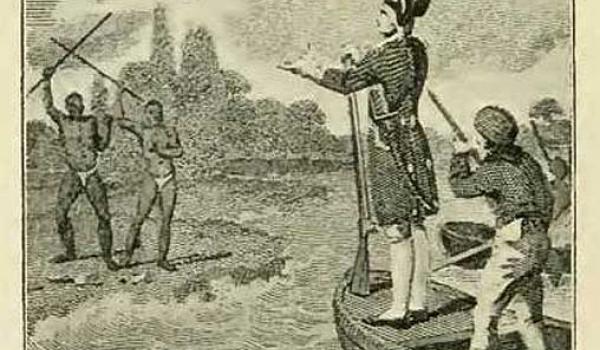
'Captain Cook lands in New South Wales' 1807 Print
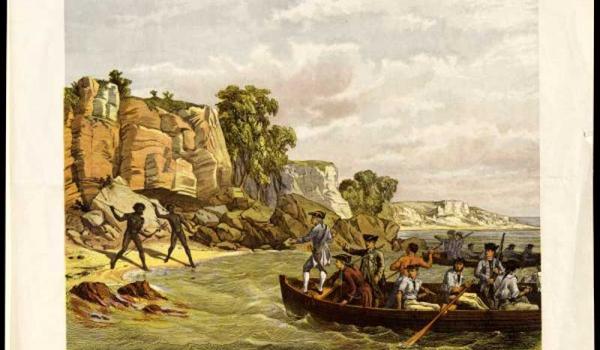
Cook wrote: "I thought that they Beckon'd to us to come ashore; but in this we were Mistaken, for as soon as We put the Boat in they again Came to oppose us upon which I fir'd a Musquet between the 2 which had no other effect than to make them retire back where bundles of their Darts lay and one of them took up a Stone and threw at us which caused my firing a Second Musquet load with small shott, and altho' some of the Shott struck the Man yet it had no other Effect than to make him lay hold ...
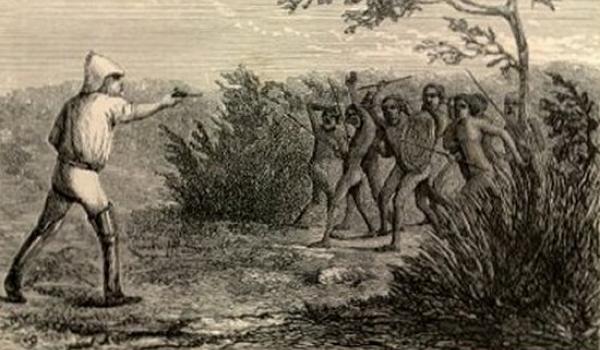
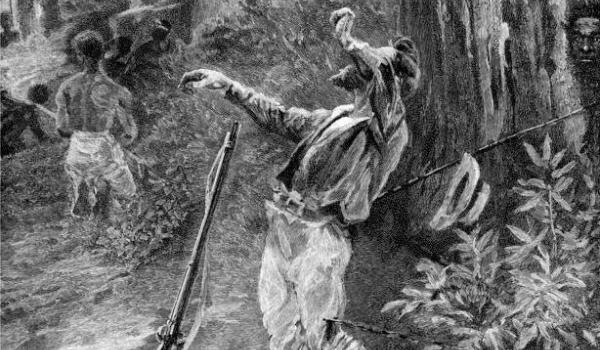
“Facing the Enemy”, in WARBURTON, Peter Egerton, Journey across the Western Interior of Australia (London, Sampson Low, Marston, Low, & Searle, 1875)
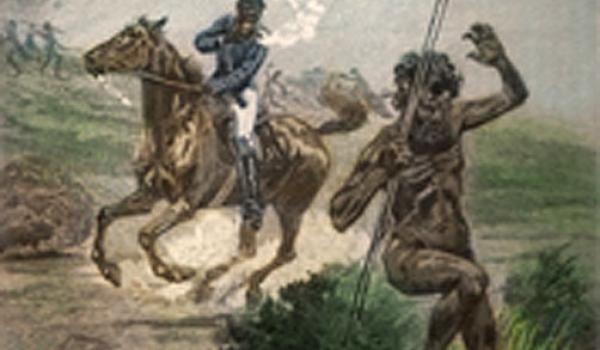
In a expidition to look for the lost Burke and Wills, Frederick Walker and his party camped on a river and 'appeared to upset the blacks' and with their superior Terry Rifles opened fire and 'about a dozen of them were killed and others wounded'.
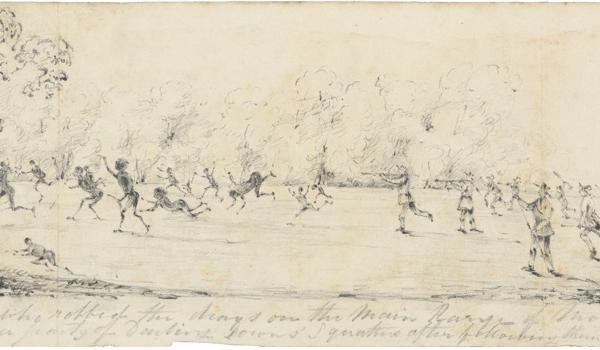
1843 — Jagera people, led by Multuggerah, block supply routes to the Darling Downs. This leads to a violent confrontation in the Lockyer Valley between squatters and Aborigines known as the Battle of One Tree Hill where the squatters are defeated. This sketch depicts an attack by squatters on an Aboriginal camp, in retaliation for the Battle at One Tree Hill in 1843. Pencil Sketch by Thomas Domville-Taylor, from the Patty Ffoulkes Scrapbook, 1840-1844
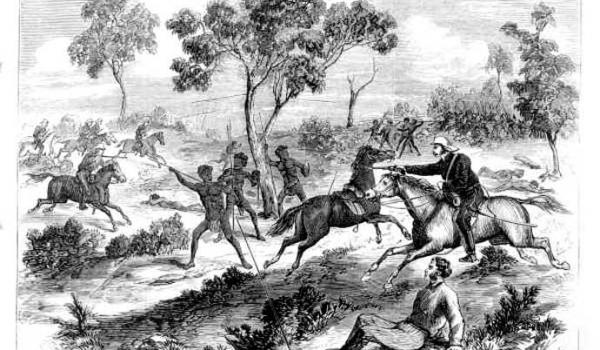
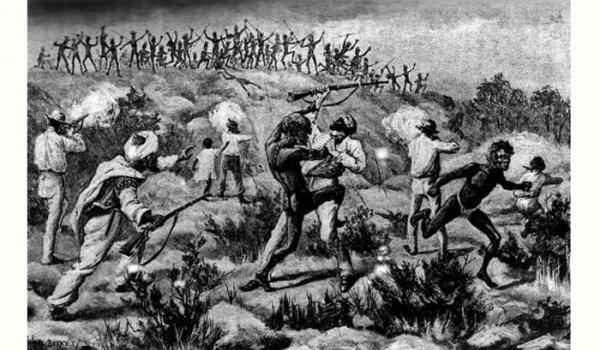
Fighting near Creen Creek, Queensland in September 1876
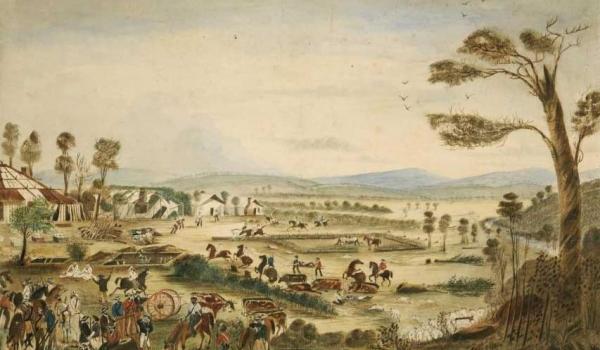
Aftermath of the 1861 Cullin-La-Ringo conflict in which 19 settlers were killed by Aborigines - 'The Wills Tragedy', 1861, painting, watercolour, by T.G. Moyle
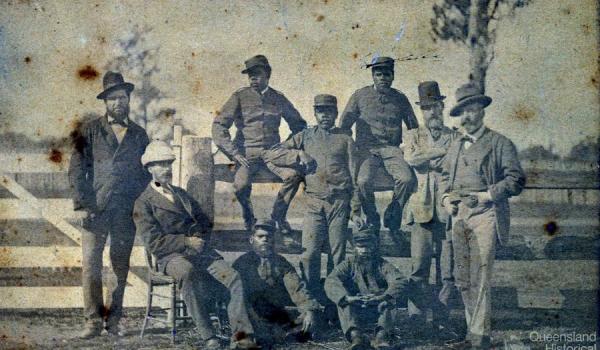
Queensland Native Police sent to hunt the Kelly Gang, 1879 unknown details of image
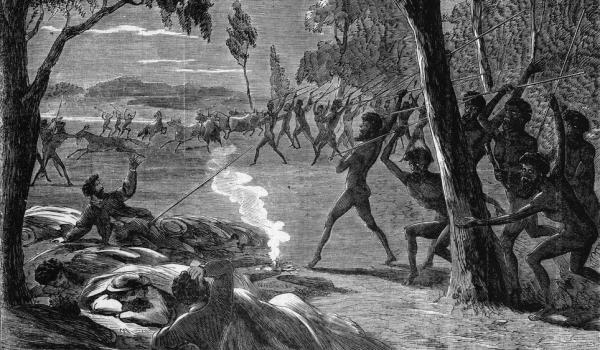
Aboriginals attack Lake Hope
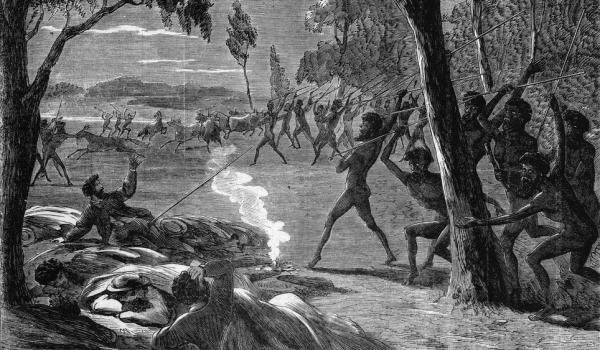
Aboriginal attack Lake Hope
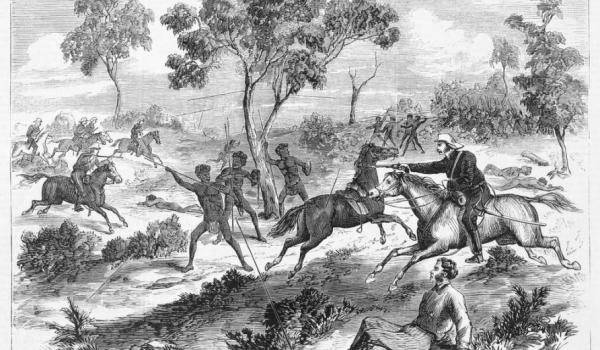
“A skirmish near Creen Creek, Queensland” published by Ebenezer and David Syme, November 1, 1876. Picture: State Library Victoria